

A Guide to Garden Gate Hardware That Fits
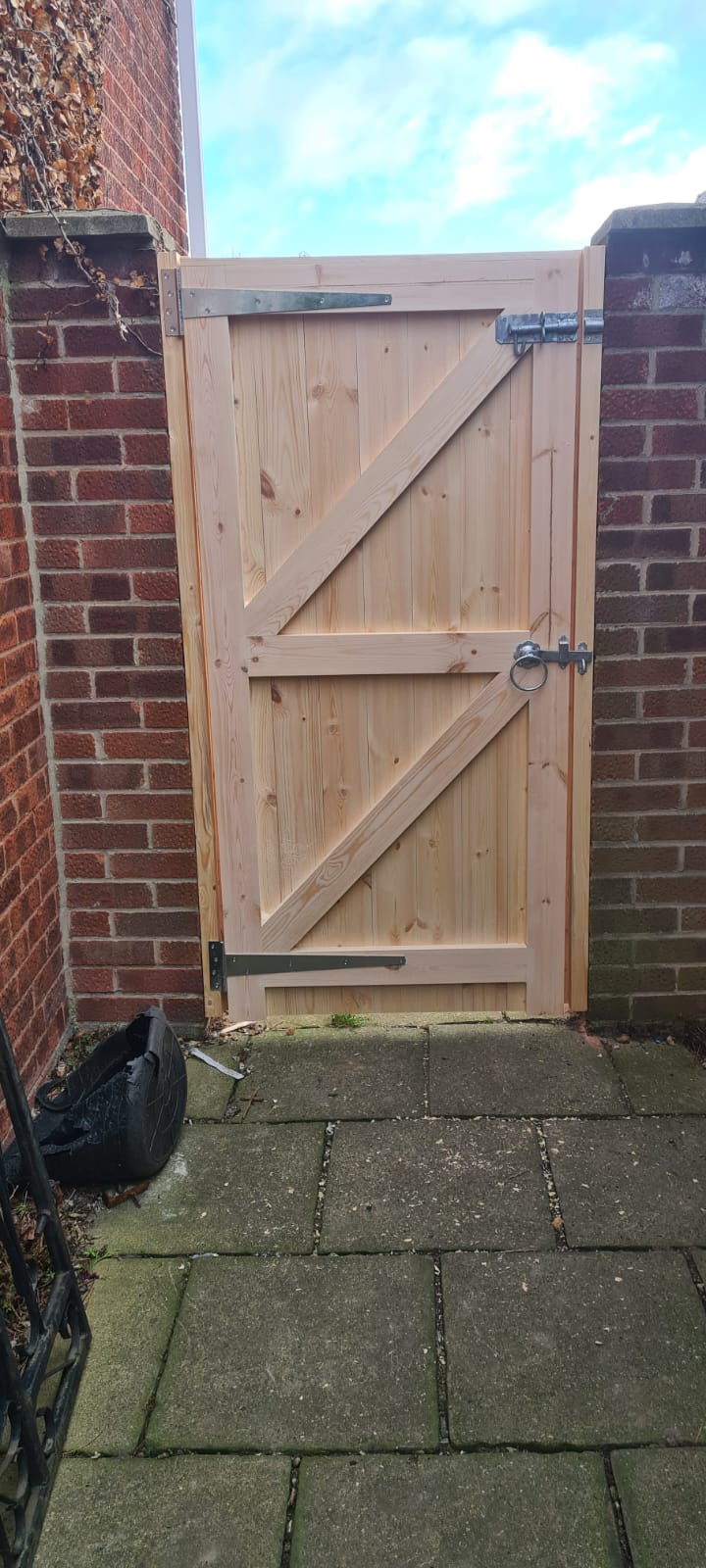
A well-made garden gate can still disappoint if its ironmongery is poorly chosen. Hinges that are too light let the gate drop, a weak latch rattles in the wind, and ordinary screws soon stain timber with rust. This guide to garden gate hardware explains what each fitting does, how to size it properly and how to choose hardware that suits a handmade timber gate and the British weather.
Start with the gate, post and opening
Garden gate hardware is not a one-size-fits-all purchase. Before choosing anything, establish the gate’s width, height, thickness and approximate weight, then check the condition and size of the hanging post. A solid gate needs a solid foundation. If the post moves, twists or is undersized, even excellent hinges will not keep the gate level for long.
The way the gate will be used matters just as much. A lightweight side gate used a few times a day can be fitted with straightforward tee hinges and a latch. A tall, closeboarded gate catching the prevailing wind needs stronger hinges, deeper fixings and a reliable means of holding it shut. Gates beside a public footpath or shared access may also need a lockable latch for privacy and security.
Measure the opening in more than one place. Brickwork, timber posts and older walls are rarely perfectly parallel. Allow a sensible clearance around the gate so it can move freely through changing seasons, without leaving such a large gap that it looks unfinished or allows pets to escape.
Hinges are the working heart of garden gate hardware
The hinge carries the full weight of the gate, so it is the fitting worth getting right first. For most traditional timber garden gates, either tee hinges or hook and band hinges are suitable.
Tee hinges have a long strap fixed across the face of the gate, with the hinge pin fixed to the post. They are familiar, practical and well suited to lighter and medium-weight gates. The strap should reach a substantial way across the gate rail rather than stopping short. As a general rule, choose straps that are at least one-third of the gate width, with longer straps providing better support on wider gates.
Hook and band hinges offer a more substantial traditional arrangement. The band is fixed to the gate while the hook is secured to the post or masonry. They are particularly useful for heavier gates because their long bands distribute load across the timber. Adjustable hook and band hinges are often the sensible choice where posts are not perfectly true, as small adjustments can be made after fitting to keep the gate aligned.
For a made-to-measure timber gate built with mortice and tenon joints, position hinges through or close to the horizontal rails, where there is proper timber to take the fixing. Avoid relying on thin boarding or the edge of a frame. A third, centre hinge can be worthwhile on tall gates or exposed sites, though it should be aligned carefully so it does not fight against the top and bottom hinges.
Galvanised steel is a dependable everyday option, particularly for a practical garden entrance. Black powder-coated hardware gives a more traditional appearance and works well with many painted or oiled timber finishes. Stainless steel offers excellent corrosion resistance, especially in coastal areas, but its brighter appearance does not suit every property. Whichever finish you choose, match it across the hinges, latch, bolts and fixings for a considered result.
Fixings matter as much as the hinges
A strong hinge fitted with short or unsuitable screws is only as good as its weakest fixing. Use exterior-grade galvanised or stainless-steel screws, coach screws or bolts appropriate for the hinge design and timber thickness. Plain interior screws are not suitable outdoors.
Coach bolts with washers and nuts provide a very secure fixing where the rear of the gate is accessible. They are a good option for heavier gates, although the bolt heads will be visible on the face of the gate. Structural exterior screws can be neater and quicker to fit, provided they are long enough to achieve a firm hold without breaking through the opposite face.
Pre-drilling is particularly worthwhile near timber edges and ends. It reduces the risk of splitting and makes it easier to pull each fitting tight and square. On engineered timber gates, careful fixing helps protect the quality of the construction and keeps the finished appearance tidy.
Choosing a latch, handle and lock
The latch determines how the gate feels in everyday use. A Suffolk latch is a traditional choice for a timber garden gate. Its thumb plate on one side lifts a latch bar on the other, allowing simple access and a pleasing cottage-style appearance. It is ideal where the aim is to keep a gate closed rather than secure it against determined entry.
A ring latch has a similar traditional character and can be operated from either side when fitted as a complete set. It is useful for passages used regularly from both the garden and driveway side. Check the handing and operation before ordering, especially where the gate opens towards a wall, fence or slope.
Where security is required, choose a lockable latch or a rim lock designed for outdoor gate use. A lock should supplement, not replace, correctly fitted hinges and a close-fitting gate. If there is enough movement in the gate or post for it to be pushed out of alignment, a lock will become difficult to operate and may suffer unnecessary wear.
Consider who will use the gate. A thumb latch may be inconvenient for a household carrying shopping, gardening tools or a child’s scooter. A handle combined with a spring latch can be easier to operate, while a self-closing arrangement may be useful for a side passage where children or dogs must not reach the road. Self-closing hinges add resistance, however, and should be correctly rated for the gate weight rather than added as an afterthought.
Bolts and stays keep the gate where you need it
A latch keeps a closed gate shut; a bolt serves a different purpose. A tower bolt fitted to the inside face gives a quick way to secure the gate from within. It is useful for garden gates, shed areas and side entrances, although it cannot be operated from outside.
A drop bolt or cane bolt is fitted to the closing edge and drops into a hole or socket in the ground. It is particularly helpful on double gates, where one leaf needs to stay fixed while the other is opened. For a single garden gate, it can also hold the gate open while moving bins, lawn equipment or bicycles through the entrance. Fit the ground socket where it will not become a trap for soil and leaves, and avoid positions that create a trip hazard on a busy path.
A cabin hook is a simple gate stay that holds an open gate against a wall or fence. It prevents wind from swinging the gate back on its hinges and is inexpensive insurance against damaged posts, crushed fingers and scuffed paintwork. Choose a hook long enough to engage securely without pulling the gate out of its natural open position.
Plan the swing before fitting anything
A gate should normally open into your own property rather than out over a pavement or shared route. Beyond courtesy and safety, this gives more control over how the gate is latched and secured. Check for slopes, steps, drainage channels and overhanging plants that could restrict the swing.
Leave clearance beneath the gate for rainwater, grit and small seasonal movement in the timber. Too little ground clearance leads to dragging and premature hinge wear. Too much can look ungainly and reduce privacy. The right amount depends on the surface: a level paved path needs less room than a gravel drive or uneven garden track.
Hang the gate first, get it level and moving freely, then fit the latch. Trying to use the latch to pull a sagging gate into place only masks the underlying problem. Once it is hung, check the gaps again with the gate both open and closed, then mark latch and bolt positions carefully before drilling.
Protect the hardware and timber together
Even galvanised or powder-coated hardware benefits from occasional inspection. Wash off mud, algae and salt deposits, particularly after winter. Lightly lubricate moving hinge pins, latch mechanisms and bolts with a suitable exterior lubricant, taking care not to splash oil across painted or treated timber.
Inspect screws and bolts annually for movement. Timber naturally responds to moisture and temperature, so a small adjustment may be needed after the first season. Tighten fixings without over-tightening them, and address any signs of rubbing or drooping early. A gate that begins to catch is far easier to correct before it strains the hinges and latch.
At Premier Timber Gates Ltd, we see hardware as part of the gate rather than an add-on. A properly made gate, built with sound joinery and paired with fittings suited to its size, will open cleanly, close firmly and retain its character for years. Choose the hardware with the same care as the timber, and the everyday journey through your garden will feel right every time.


Comments