

Are Mortice Tenon Gates Stronger Than Other Gates?
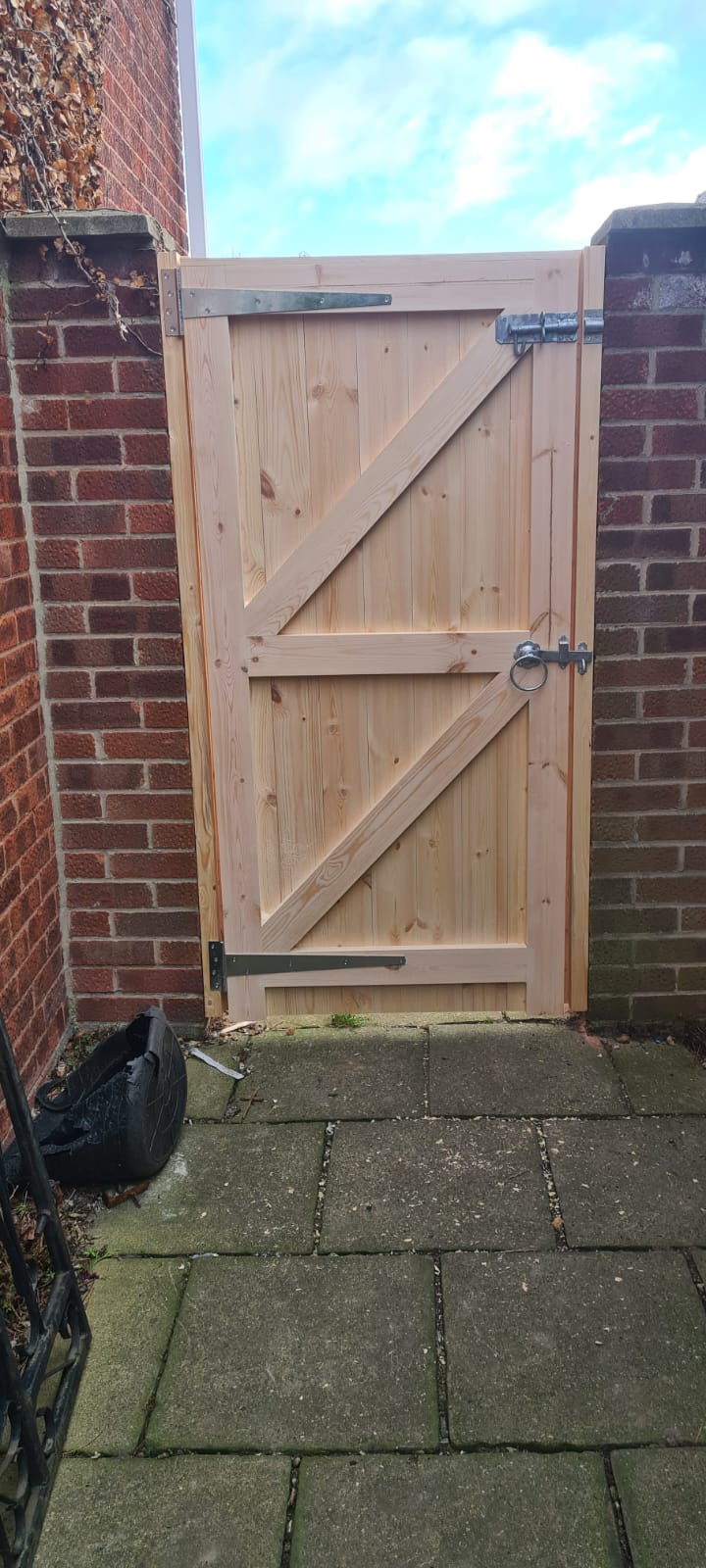
A wooden gate rarely fails in the middle of a rail. It usually starts at a joint: a corner opening slightly, a stile twisting, or a hinge side taking more strain than the rest of the frame can handle. That is why homeowners often ask, are mortice tenon gates stronger than other gates? In most cases, yes. A properly made mortice and tenon gate is considerably stronger and longer-lasting than a gate held together mainly with screws, brackets or butt joints.
The important qualification is that joinery is only one part of the job. The timber, gate design, glue, dowels, hinges, posts and installation all determine how a gate performs through British rain, frost, summer heat and daily use.
Why mortice and tenon joints make a stronger gate
A mortice and tenon joint locks two pieces of timber together mechanically. The tenon is formed on the end of a horizontal rail, while the mortice is the matching slot cut into the vertical stile. When the tenon is fitted into the mortice, glued and pinned with hardwood dowels, the joint has a large area of timber-to-timber contact.
This matters because a gate is constantly under load. Its weight pulls downwards from the hinge side, wind pushes against its face, and opening and closing create repeated movement at the corners. A mortice and tenon joint spreads those forces into the stile and rail rather than relying on a few screw threads gripping in end grain.
By comparison, a simple butt joint places one timber end against another and commonly uses screws or nails to hold it in place. It can be quick to make and perfectly adequate for a light, temporary gate, but it has less resistance to racking. Over time, the frame can work loose, particularly where the gate is wide, heavy or exposed to the weather.
A well-proportioned mortice and tenon joint also helps the gate keep its shape. The rails are held firmly within the stiles, reducing the tendency for the frame to drop out of square. That is especially valuable on driveway gates and taller garden gates, where even a small amount of movement can lead to dragging, poor latching or uneven gaps.
Are mortice tenon gates stronger in all situations?
They are generally the stronger choice for an exterior timber gate, but no joint is indestructible. A mortice and tenon gate can still sag if it is too wide for its frame section, fitted with undersized hinges or hung from posts that move in the ground. Equally, poor-quality timber can split or distort regardless of how carefully the joints were cut.
The strength of the joint depends on sound proportions. A tenon that is too thin has little material to resist movement; one that is too large can weaken the stile by removing too much timber. The mortice must be accurately cut, the shoulders need to sit tight, and the frame should be assembled square. These are workshop details that do not always show in a product photograph, but they make a real difference years later.
Exterior adhesive is another key part of the construction. D4 exterior-grade glue is designed for wet and humid conditions, helping seal and strengthen the timber-to-timber connection. Hardwood dowels provide an additional mechanical fixing, holding the joint securely while allowing a traditional, clean finish without visible metal brackets across the face of the gate.
The result is not simply a gate that feels heavier. It is a frame designed to deal with the forces that cause ordinary timber gates to loosen and lose their shape.
The timber matters as much as the joinery
It is tempting to compare gates only by their joints, but timber movement is often the deciding factor in long-term performance. All wood responds to moisture. It expands when damp, contracts as it dries and may twist if there are stresses within the board.
Engineered timber is made by laminating selected timber sections together with the grain arranged to improve stability. This construction reduces the natural tendency for a large solid piece to cup, bow or twist. For an exterior gate, that added stability helps protect the mortice and tenon joints from the stresses caused by seasonal movement.
That does not mean engineered timber needs no care. It still requires a suitable exterior finish and sensible maintenance. However, it offers a practical balance for homeowners who want a strong, handmade gate without the high cost commonly associated with hardwood.
A gate made from unstable or poorly dried timber may put pressure on even the best joint. Conversely, a stable engineered timber frame with proper mortice and tenon joinery gives the gate a much better foundation for a long service life.
Frame design affects gate strength
The classic five-bar gate design has lasted for generations for good reason. Its diagonal brace transfers the weight of the hanging side upwards towards the top hinge side. This helps prevent the gate from sagging under its own weight.
For a boarded gate, framed ledged and braced construction serves a similar purpose. The outer frame carries the main load, while ledges and braces support the boards and keep the gate square. On wider driveway gates, heavier sections and suitable centre rails may be needed to control weight and wind pressure.
The direction of the brace is important. Looking at the gate from the side that opens towards you, the brace should rise from the lower hanging corner to the upper closing corner. This lets the brace work in compression, supporting the weight rather than simply hanging from the frame.
Decorative details also need consideration. Close-boarded gates offer privacy, but they present a larger surface to strong winds than an open five-bar design. A solid gate may therefore need a heavier frame, stronger posts and more substantial hinges. Mortice and tenon joints are part of that stronger structure, not a substitute for correct sizing.
Strong joints still need proper hinges and posts
A well-made gate frame can only perform as well as its support. Heavy-duty adjustable hinges are often the sensible choice for driveway and garden gates because they allow the gate to be set accurately and adjusted if settlement occurs. The hinge fixings need sufficient depth and strength in both the gate stile and the post.
Posts should be correctly sized for the gate weight and installed securely. If a post leans, twists or loosens, the hinge side of the gate will be pulled out of alignment. Homeowners sometimes assume a sagging gate has failed at the joints when the actual issue is post movement or unsuitable hinge hardware.
Allowance for clearance is equally important. Timber gates need room above the ground to avoid catching on gravel, paving or a rising driveway. They also need sensible gaps around the frame so that minor seasonal movement does not cause binding. A gate that is forced tightly into an opening can suffer unnecessary strain every time it is used.
How to spot a properly made mortice and tenon gate
When comparing gates, look beyond the overall style. Ask how the frame is joined and whether the gate is made to suit the opening rather than cut down from a standard size. A made-to-measure gate can be designed with appropriate rail and stile dimensions, reducing the need for compromises at installation.
The joint lines should be tight and neat, with no obvious gaps around the rails. Hardwood dowels are a good sign of traditional pinned construction, while exterior-grade adhesive provides protection where moisture may reach the joints. Check that the frame includes suitable bracing for the gate type and that the proposed hinges and posts match the size and weight of the gate.
It is also worth asking what preparation is required before fitting. Bare timber should be primed and finished promptly with a suitable exterior treatment, including end grain and cut faces. Neglecting this stage leaves the timber more vulnerable to water ingress, which can shorten the life of any gate, however strong its construction.
The sensible choice for a gate built to last
Mortice and tenon construction is not an unnecessary traditional flourish. It is a proven method of building a gate frame that can resist weight, regular use and the changing British weather far better than a lightly screwed-together alternative. Combined with stable engineered timber, D4 exterior glue, hardwood dowels and correctly specified ironmongery, it creates the sort of strength homeowners notice over years rather than weeks.
If you are choosing a new gate, focus on how it is made as well as how it looks. A well-fitted, properly finished mortice and tenon gate gives you a dependable entrance to use every day, with the character that only real timber can bring to a property.


Comments