

A Practical Home Guide to Gate Latch Types
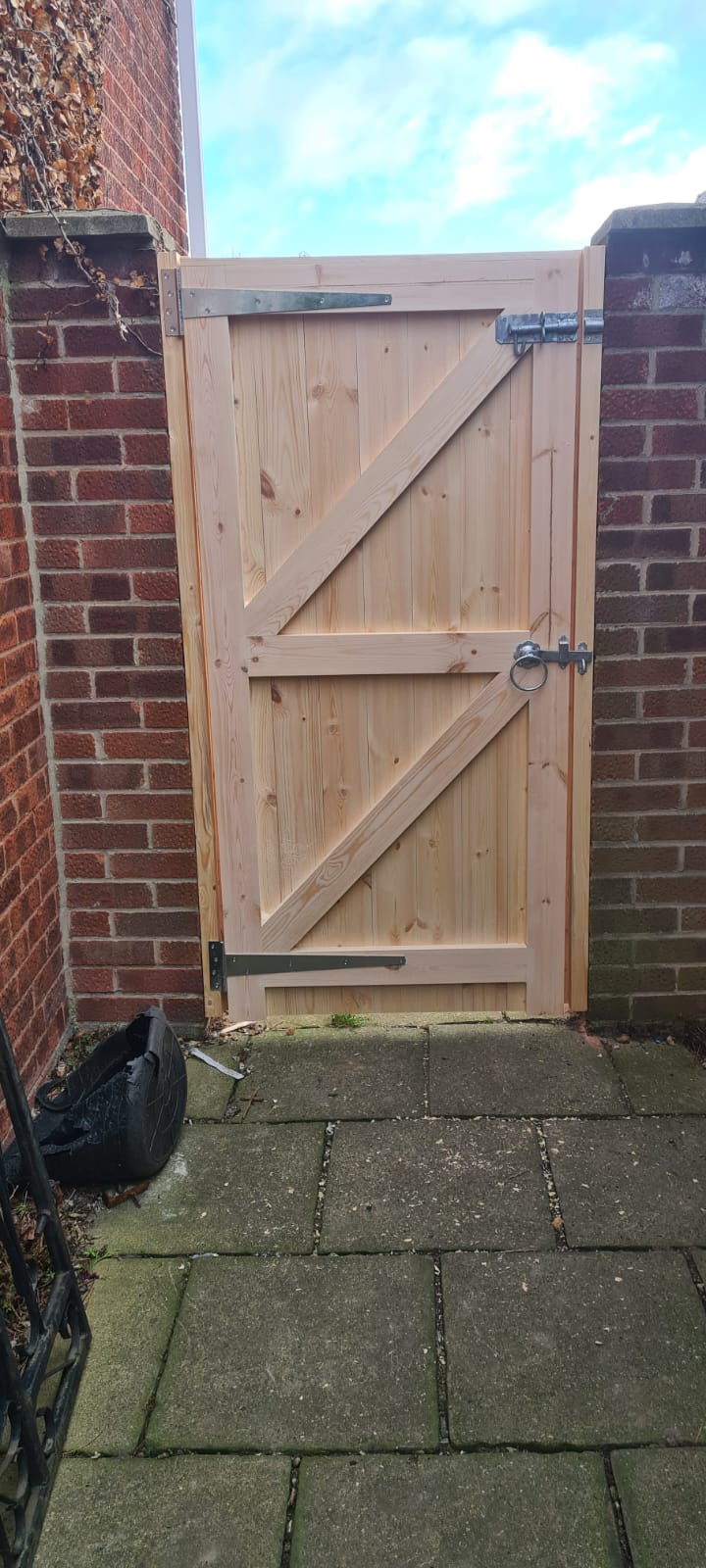
A gate that looks properly made but rattles, sags or will not stay shut is frustrating from the first day. The right latch does more than close a gate: it affects how the gate feels to use, whether it can be opened from both sides, and how secure the entrance is. This guide to gate latch types sets out the main choices for timber garden gates and driveway gates, with practical advice on where each one works best.
Start with the job your latch needs to do
Before choosing a style, consider who will use the gate and what sits behind it. A side garden gate usually needs a simple latch that is easy to operate with one hand. A front garden gate may need a more decorative finish as well as the ability to open from either side. A driveway gate often needs a stronger fastening arrangement, particularly where wind, wider leaves or privacy are involved.
The direction of opening matters too. Most traditional latches are fitted to gates that open inwards, towards the property, but this is not a fixed rule. Check the hinge position, the clearance around the gate and whether the latch handle will foul a post, wall or gate stop. It is far easier to establish this before drilling into a finished timber gate.
A latch is not necessarily a security lock. Its main job is to hold the gate closed. If you need to restrict access, particularly to a rear garden or driveway, choose a latch that can be secured with a padlock or combine it with a proper gate lock and suitable bolts.
Guide to gate latch types for timber gates
Suffolk latch
The Suffolk latch is the traditional choice for a timber pedestrian gate. It has a thumb plate on the outside and a handle, often called a bar, on the inside. Pressing the thumb plate lifts the latch bar from its catch, allowing the gate to open. It is a familiar design that suits cottages, period properties and straightforward handmade garden gates.
One of its strengths is simplicity. It is easy to understand, gives a satisfying solid action when fitted correctly and looks at home on boarded, ledged and braced gates as well as framed designs. Suffolk latches are generally available in black, galvanised, stainless steel and more decorative finishes.
The trade-off is that a standard Suffolk latch is primarily a convenience fastening. It does not provide meaningful security on its own, and the outside thumb plate may be accessible to anyone approaching the gate. For a side passage, pair it with a padbolt, long throw lock or locking bolt where appropriate.
Ring latch
A ring latch uses a ring handle on one or both sides of the gate. Turning or lifting the ring operates the latch mechanism. This makes it a sensible option where the gate needs to be opened from either side without reaching over the top.
For front garden gates, a ring latch can be particularly practical. A visitor can operate it from the pavement, while household members can return through the gate without relying on an inside-only handle. The appearance is usually a little neater and more symmetrical than a traditional thumb latch, especially when both sides of the gate are visible.
Not every ring latch works in exactly the same way. Some are plain latches, while others are lockable or designed to take a padlock. Check whether the model is suitable for the thickness of your gate and whether it is handed for the way your gate opens. A latch that looks right on a product photograph can be awkward in use if the handle orientation is wrong.
Lever latch
A lever latch has a conventional handle that lifts or depresses to release the catch. It is often chosen for a cleaner, less rustic look and can be easier for people who find a small thumb plate or ring difficult to grip. Many lever latches are designed for use with a mortice lock or key-operated cylinder, making them a useful choice where a garden gate needs everyday security.
This option suits contemporary timber gates, side entrances and gates near a house where you want the operation to feel more like an exterior door. It is also worth considering for homes with young children, older relatives or frequent deliveries, as the handle can be straightforward to use.
The quality of the latch and lock matters. A light-duty lever set may be suitable for a narrow garden gate but not for a heavy framed gate exposed to wind. The latch should close positively against a properly positioned keep, without needing the gate to be lifted or forced into place.
Gravity latch
A gravity latch drops into place when the gate closes. The gate strikes the latch arm, which lifts and then falls behind a catch under its own weight. It is a very simple arrangement, widely used on basic garden gates, field-style gates and utility entrances.
Its chief benefit is that it can self-close when the gate is pushed shut. For a garden gate used regularly by children or when carrying tools, that can be handy. However, a gravity latch is only as reliable as the gate alignment. If the gate drops, twists or moves with seasonal timber movement, the latch may stop catching cleanly.
For a lightweight gate, this may be perfectly adequate. For a taller, heavier or more valuable made-to-measure gate, it is usually better as part of a wider fastening arrangement rather than the only means of closure.
Cabin hook and eye
A cabin hook is not a latch in the strict sense, but it is useful gate ironmongery. It consists of a hook fixed to the gate and an eye or staple fixed to the post, or vice versa. It is commonly used to hold a gate open against a wall, fence or post.
It should not be relied upon to keep a gate closed, particularly in windy conditions. Used as a gate stay, however, it prevents a gate leaf swinging back while you move a car, wheelie bin or garden equipment through the opening. Choose a substantial hook for a heavy timber gate and position it so there is no strain on the hinges when the gate is held open.
Padbolts and sliding bolts
A padbolt or sliding bolt is another fastening rather than a day-to-day latch, but it is often essential. Fitted on the inside face of a gate, it slides into a staple, receiver or hole in the post. Some can be locked with a padlock; others are used simply to secure the inactive leaf of a pair of driveway gates.
On double gates, a drop bolt is often fitted to the bottom of one leaf to hold it in place, while the other leaf closes against it. This gives the main latch or lock something solid to engage with. For tall driveway gates, fitting top and bottom bolts to the first-closing leaf can reduce movement and keep the pair aligned.
Match the latch to the gate construction
A well-made latch cannot compensate for poor gate alignment. Timber gates should hang squarely with suitable hinges, firm posts and sensible ground clearance. A gate that drags on paving will place strain on the latch, catch and hinges every time it is used.
The thickness and construction of the gate also affect your choice. A framed, ledged and braced gate made with mortice and tenon joints offers a solid area for fixing ironmongery. On a boarded gate, check that fixings pass through sound timber or are supported by rails. Avoid placing screws only into thin cladding boards, as repeated use can loosen them.
Measure the gap between the closing stile and the post before ordering. Most latches allow for a modest gap, but too much space can leave the latch unable to reach the catch, while too little can cause binding as timber expands in damp weather. Engineered timber construction helps reduce movement, but all exterior timber benefits from sensible tolerances and regular care.
Finish, maintenance and weather exposure
Black epoxy-coated ironmongery is a popular traditional finish, but it should be checked periodically for chips and touched up before bare steel begins to rust. Galvanised steel has a practical, silver-grey appearance and offers good protection for exposed side gates. Stainless steel is well suited to coastal areas and contemporary schemes, although the style may not suit every traditional property.
Whatever finish you choose, use fixings suitable for exterior timber and keep moving parts lubricated. A little light oil on a pivot, spring or latch bar can stop stiffness and squeaking. If the gate begins to drop or catch, correct the hinges or post alignment rather than forcing the latch to compensate.
Choosing with confidence
For a traditional garden gate, a Suffolk latch is hard to beat for appearance and straightforward everyday use. Choose a ring latch when access is needed from both sides, a lever latch where a neater handle and lockable option are wanted, and bolts where security or double-gate stability is the priority. The best arrangement is the one that suits the gate’s weight, opening direction and daily use - then fits cleanly to sound timber and properly set posts.
Take the time to plan the latch alongside the gate, hinges and posts rather than treating it as a last-minute accessory. A good fitting will make a handmade timber gate feel secure, close cleanly and serve the property well for years.


Comments