

Best Entrance Gates for Cottages That Last
A cottage gate is often the first thing visitors notice - before the planting, the front door or the view beyond the drive. The best entrance gates for cottages need to look at home with the property, but they also need to deal with wet winters, daily use and the occasional gust of wind that puts every joint under pressure.
That is why choosing a gate should start with the entrance itself, rather than simply selecting the most decorative design. A compact stone cottage, a period terrace and a rural property with a long drive can all suit timber gates, yet each calls for a different balance of privacy, proportion and practicality.
Start with the character of the cottage
Cottages rarely benefit from gates that are too heavy, too tall or overly ornate. The aim is to frame the entrance rather than overpower it. A simple timber gate with well-considered proportions usually feels more settled than a grand design borrowed from a large country house.
For a front path or side entrance, a single pedestrian gate is often the right answer. It gives clear access for family, guests and deliveries without making a small frontage feel enclosed. A gently arched top can soften straight boundary lines, while a square or flat top creates a quieter, more traditional look.
Where the entrance opens onto a driveway, a pair of wooden gates can give a cottage a pleasing sense of arrival. Double gates work especially well on wider rural plots, but their height and rail layout should still reflect the building. A tall, solid pair may be useful where privacy is essential, whereas a more open design can retain the view and make a narrow lane feel less confined.
Which gate style suits a cottage entrance?
There is no one design that suits every cottage. The best choice depends on what you need the gate to do when it is closed, as well as how it looks from the road.
Ledged and braced gates for simple country character
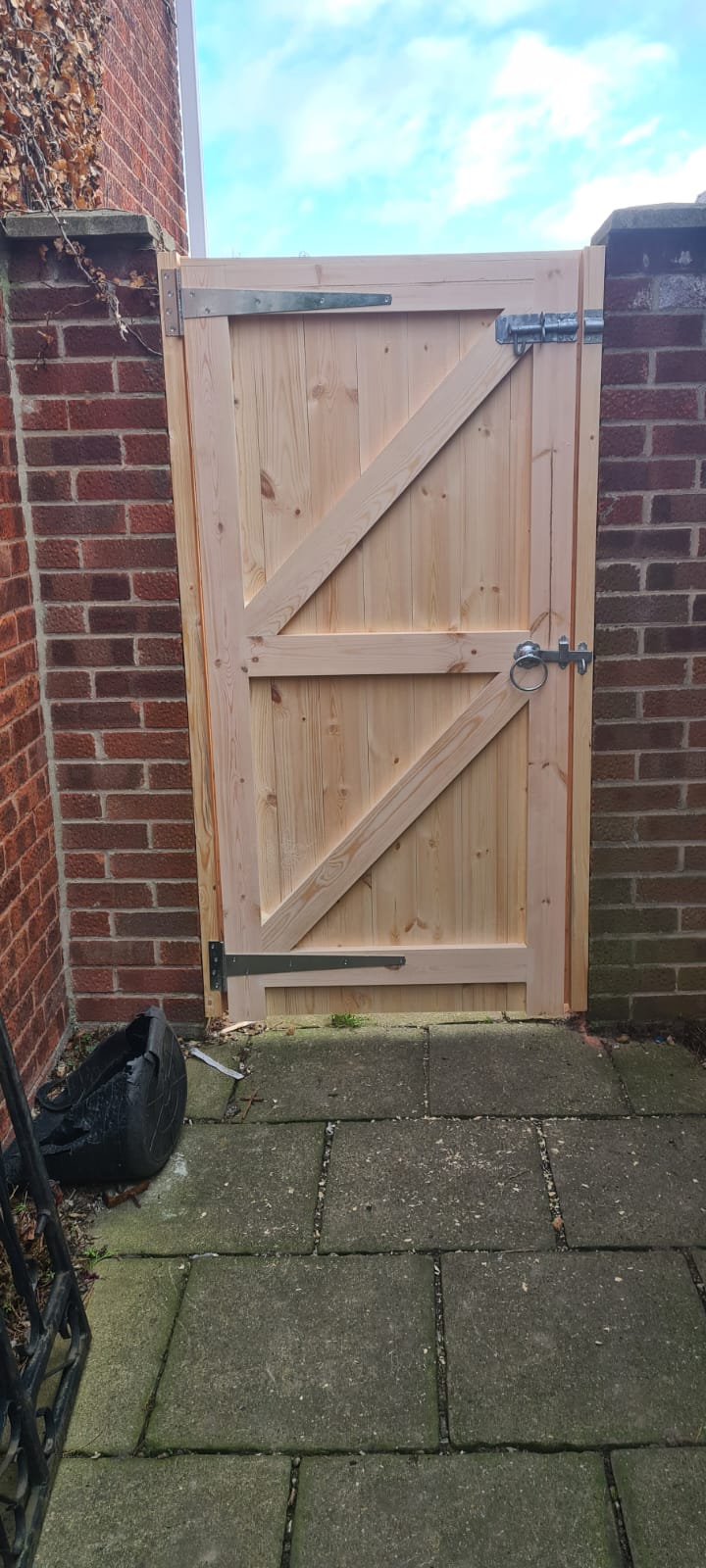
A ledged and braced gate has a familiar, honest appearance that works particularly well beside stone walls, timber fencing and older brickwork. The diagonal bracing helps support the gate structure, while vertical boards offer a traditional finish. This style suits side passages, garden entrances and modest front paths where full privacy is wanted without a formal appearance.
Boarded gates can also be made with either a plain top or a shaped head. A small curve is often enough to add character. Excessive shaping can look out of place on a restrained cottage frontage, so simplicity generally ages better.
Picket gates for a welcoming boundary
A picket gate is a strong choice where you want to mark an entrance without shutting off the garden. It works well with low fencing, cottage planting and front gardens that benefit from light and visibility. It is less suitable if you need to contain a dog that can squeeze between pales, or if the gate faces a busy pavement and privacy is a concern.
Spacing matters. Wider gaps create a lighter, more informal feel, while closer pales provide more security and make the gate feel more substantial. The design should also match the fence height. A low picket gate beside a high, solid panel can look disconnected unless the transition is handled carefully.
Framed, boarded gates for privacy and security
For cottages on busier roads, or properties with overlooked entrances, a framed and boarded gate is often the more practical option. Solid boarding gives useful screening, and a properly made framed construction provides far more strength than a lightweight boarded panel fixed to a basic frame.
This style can still look traditional. Vertical boards, clean rails and a restrained curved top sit comfortably with many period properties. The key is avoiding an overly smooth, factory-made appearance. Timber with visible grain and a sound, hand-finished construction has a warmth that suits older homes.
Five-bar gates for drives and rural settings
A five-bar gate remains a favourite for cottage driveways, especially where the property has open views, a gravel approach or a country boundary. Its open design keeps the entrance airy and allows the gate to sit naturally within hedging, post-and-rail fencing or field boundaries.
The trade-off is privacy. A five-bar gate will not conceal vehicles or garden areas, and it may not suit a roadside property where children or pets need a more enclosed boundary. Adding wire mesh is an option, although this changes the appearance and should be considered at the design stage.
Construction matters more than a coat of stain
A gate can look excellent on delivery and still disappoint within a few seasons if the timber and joinery are not up to the job. Exterior gates are exposed on both faces, often with one side catching more sun and rain than the other. That uneven exposure is what causes many poorly made gates to twist, split or drop.
For a cottage gate that is expected to last, look beyond surface appearance. Mortice and tenon joints give a timber frame proper mechanical strength, particularly when paired with hardwood dowels and exterior-grade D4 adhesive. This is a very different standard from a gate held together mainly by screws and thin timber sections.
Engineered timber is also worth considering. It is designed to offer greater stability than ordinary pressure-treated timber, helping to reduce movement as the weather changes. For homeowners who like the warmth of wood but do not want the cost of hardwood, it provides a sensible middle ground.
At Premier Timber Gates Ltd, gates are made to order using engineered timber construction and traditional joinery. That approach is particularly useful for cottage entrances, where standard off-the-shelf sizes rarely match existing walls, old posts or uneven openings.
Get the proportions and measurements right
Older cottages are full of small irregularities. Gate posts may lean slightly, walls may not be parallel, and a driveway may rise sharply from the road. Measuring only the width at the top of an opening is a common mistake. Take measurements at the top, middle and bottom, then work from the narrowest point.
Allow for hinges, latch clearance and a sensible gap beneath the gate. A gate set too close to gravel, paving or a sloping drive will drag as the ground shifts or debris builds up. On a driveway, consider where the gates will meet when closed and whether there is enough level ground for a drop bolt.
The posts are just as important as the gate leaves. Strong, correctly sized timber posts set securely in the ground will help the gates hang true. If existing stone or brick pillars are being used, check that they can take the weight and that there is enough room for hinge plates or adjustable fittings.
Choose ironmongery for use, not just appearance
Black ironmongery is a natural fit for traditional cottages, but the style needs to be matched to the gate weight and frequency of use. Decorative tee hinges may suit a light pedestrian gate, while heavier driveway gates usually need substantial adjustable hinges that allow for future alignment.
A thumb latch gives a classic cottage finish on a garden gate, but make sure it can be operated comfortably from both sides where needed. For a drive, a locking latch or gate bolt may be more suitable. If the entrance is exposed, galvanised or weather-resistant fittings beneath a black finish can offer better long-term protection.
Think about daily routines too. A beautiful pair of gates becomes tiresome if they are awkward to secure in wind or difficult to open when returning home. For some households, automation is worthwhile, but the gate structure, posts and underground work all need to be planned for it from the outset.
Finish and maintain timber with the weather in mind
The right finish protects the timber while allowing its character to show. Oils can enhance the natural grain and are straightforward to refresh, although they need regular attention. Paint offers stronger colour definition and can suit cottages with painted window frames, doors or trim, but any damaged area should be dealt with promptly to prevent moisture getting beneath the coating.
Before finishing, ensure the timber is properly prepared and use products intended for exterior joinery. Pay particular attention to end grain, lower rails and areas around joints, as these are the places where water tends to sit. Keeping vegetation clear of the gate and checking hinges annually will also prevent small problems becoming expensive repairs.
A well-chosen cottage gate should feel as though it has always belonged at the property. Choose the design for the way you live, have it made to the opening rather than forcing the opening to suit, and give the timber construction the same care you would expect from the cottage itself.


Comments