

Choosing a Ledged and Braced Garden Gate
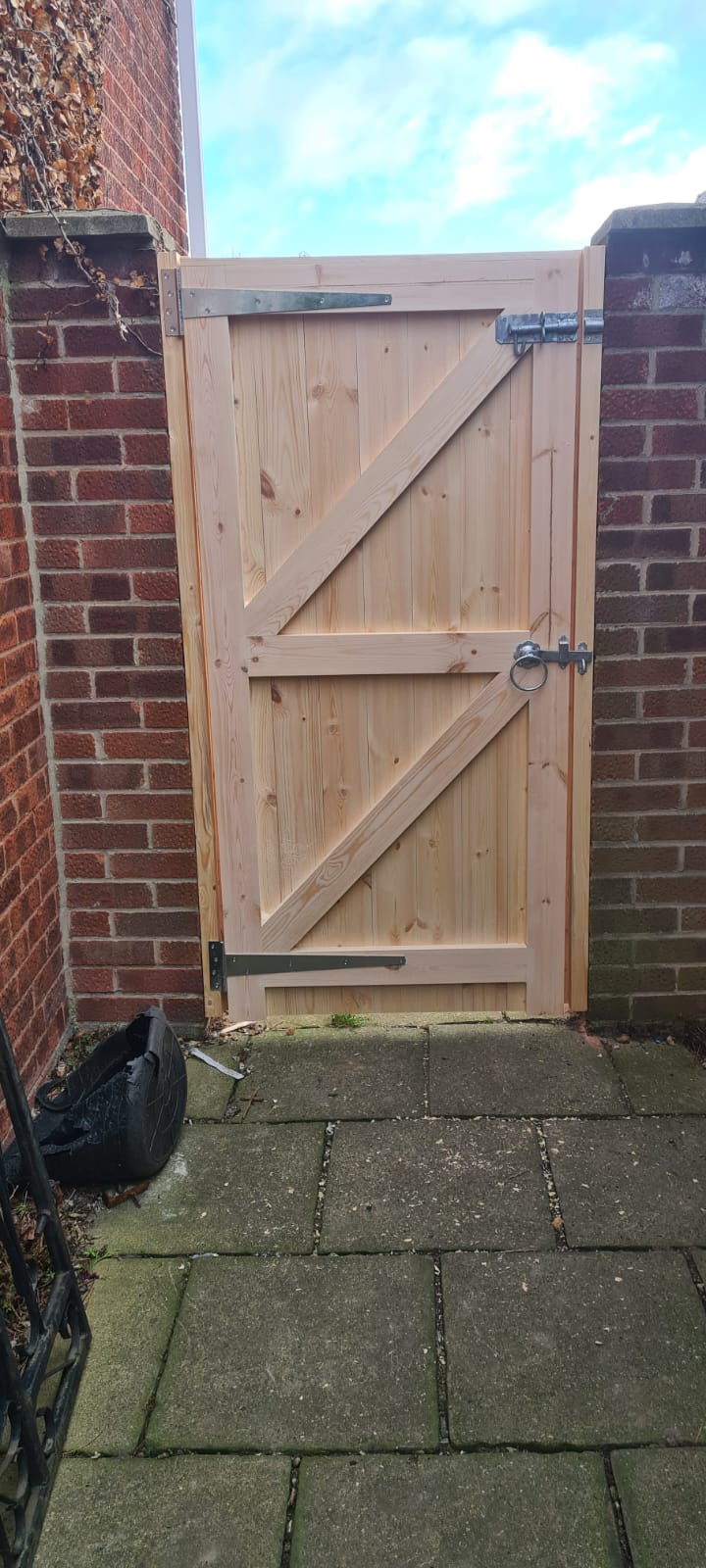
A garden gate has a hard-working life. It is opened with muddy hands, pushed by children, caught by the wind and exposed to every wet winter and dry spell the British weather provides. A ledged and braced garden gate is built for exactly this sort of job: a straightforward, traditional design that gives timber the support it needs to stay useful, secure and good-looking for years.
For many homes, it is the right answer to a side passage, back garden, allotment boundary or sheltered courtyard. It offers privacy without making a garden feel overbuilt, and its familiar boarded appearance suits everything from period cottages to newer family homes. The quality, however, comes down to more than the pattern of the boards. Timber selection, joinery, bracing direction, correct sizing and fitting all determine how well a gate performs.
What makes a ledged and braced gate strong?
The name describes the construction. Vertical boards form the face of the gate, while horizontal ledges run across the back to hold them together. Diagonal braces connect those ledges and prevent the gate from dropping out of square under its own weight.
That diagonal support is not simply decorative. A gate hangs from one side, so gravity constantly pulls at the unsupported outer corner. The brace needs to run upwards from the bottom hinge side towards the top closing side. This transfers weight back towards the hinges, where the posts and ironwork can carry it. If the brace is fitted the wrong way round, it cannot do its intended job and the gate is more likely to sag over time.
This is why a properly made ledged and braced gate remains a popular choice. It uses a simple structural principle that has worked on British gardens, yards and outbuildings for generations. It is also a practical style for made-to-measure work, as the proportions can be adjusted to suit a narrow passage, an awkward opening or a taller boundary without losing the character of the design.
Why construction matters more than a quick first impression
Two timber gates may look similar from the front, particularly when new. The differences tend to appear after seasons of rain, sunlight and regular use. Thin boards, weak fixings and basic framing can leave a gate twisting, splitting or dragging on the ground far sooner than expected.
A well-built garden gate should use timber suited to external conditions and construction that accounts for timber movement. Wood is a natural material. It expands and contracts as moisture levels change, so no honest manufacturer should suggest that it will never move at all. The aim is to build a gate that manages that movement well and has the strength to resist distortion.
At Premier Timber Gates, handmade gates are produced from engineered timber chosen for greater stability than ordinary pressure-treated timber. Proper mortice and tenon joints, exterior-grade D4 glue and hardwood dowels give a frame genuine mechanical strength rather than relying on screws alone. This traditional approach costs less than specifying hardwood, while providing the solid construction most domestic gates need.
For a ledged and braced design, ask how the boards are secured, how the ledges and braces are fixed, and whether the gate is made for the height and width of your opening. These details are more useful than a flattering photograph. A gate is an outdoor moving structure, not just a timber panel placed between two posts.
Choosing the right size and layout
Measure the clear opening between the posts at the point where the gate will hang. Do not order a gate at exactly the same width as the opening. Clearance is needed for hinges, latch furniture and a small working gap, allowing the gate to move freely without rubbing the post.
It is worth measuring in more than one place. Older brickwork, timber posts and garden walls are rarely perfectly square. Take the width at the top, middle and bottom, then use the narrowest measurement as the starting point. Check the height from finished ground level too, especially if a driveway, paving or path slopes across the opening.
A low gate can define a garden while preserving a view. A taller gate gives more privacy and can help keep children and pets within the garden, provided the surrounding boundary is equally secure. For a tall or wide single gate, weight becomes a greater consideration. Stronger posts, substantial hinges and careful fitting matter more as the gate gets larger.
The direction of opening deserves thought before ordering. Most garden gates open inwards, keeping them clear of a public path or shared access. Consider wheelie bins, steps, sheds and planting beds as well. A gate that looks right on a drawing can be inconvenient if it opens across the only clear route through the garden.
Posts are part of the gate system
A strong gate cannot compensate for weak or loose posts. Posts should be substantial enough for the weight and width of the gate, installed plumb and set securely in suitable foundations. If an existing post is leaning, cracked or soft at ground level, replacing it is usually wiser than fitting a new gate and hoping for the best.
Allow enough room for hinge plates, hooks and the latch. On a masonry opening, timber posts often provide the most reliable fixing surface and make later adjustment simpler. Where gates are being installed between timber posts, make sure both posts are aligned before the ironmongery goes on.
Selecting ironmongery that will last outdoors
Hinges and latches are not afterthoughts. They carry the weight, control the movement and determine how the gate feels each day. For a traditional boarded garden gate, hook and band hinges are often a sensible choice because the bands spread the load across the gate rather than concentrating it at a small point.
The hinge length and fixing arrangement should suit the gate width and weight. A heavier gate may require longer bands, sturdier hooks or additional support. Choose finishes with outdoor use in mind. Galvanised, zinc-plated or properly protected ironmongery can all have a place, depending on the appearance required and the exposure of the site.
A latch should be easy to operate from the side you use most. If security is needed, consider a lockable fitting or a hasp and staple arrangement suited to the gate and its location. It is sensible to plan this before manufacture, particularly where the gate needs a specific lock rail, closing stile or matching pedestrian access.
Finishing and maintaining your garden gate
Even quality timber benefits from care. A suitable exterior primer, preservative treatment, paint, stain or oil helps reduce moisture uptake and protects the surface from UV exposure. The best finish depends on the look you want and the maintenance you are willing to carry out.
Paint gives strong colour coverage and can suit a house exterior or garden scheme, but it needs attention when the coating eventually chips or weathers. Stains and oils allow more of the grain to show and can be easier to refresh, although they may need reapplying more often on a gate facing strong sun or driving rain. Whichever option you choose, coat all accessible faces and edges, not just the front that visitors see.
Inspect the gate at least once a year. Check that hinge fixings remain tight, the latch closes cleanly and the gate has not begun to catch on the ground. Clear soil, leaves and vegetation away from the bottom edge, as timber should not sit in standing water. A small adjustment made early is usually far simpler than repairing a gate that has been allowed to drag for months.
When a ledged and braced design is the best choice
This style is particularly well suited to traditional gardens, side entrances and practical access points where privacy and strength matter. It is generally more characterful than a plain framed panel and often more economical than a heavily detailed bespoke design. If you need a fully framed gate to match driveway gates, a more decorative top, or a design that offers views through the garden, another style may be a better fit.
The key is to choose a gate that suits the opening, the exposure of the site and the way your household uses it. A properly sized ledged and braced gate, hung on sound posts with suitable ironmongery, is one of the simplest improvements you can make to a garden boundary - and one that earns its keep every time it closes cleanly behind you.


Comments