

Driveway Gates vs Garden Gates Compared
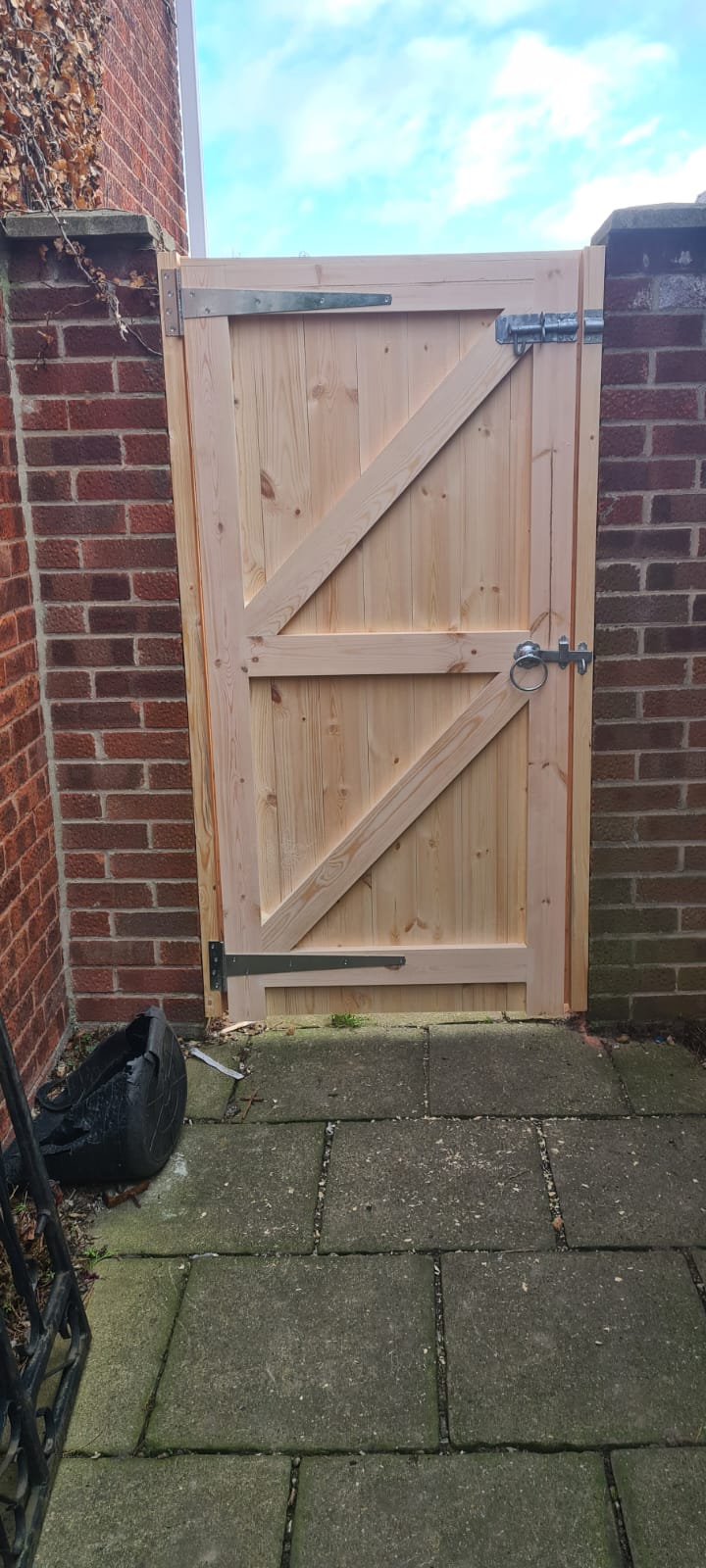
A gate can be the first thing visitors see or the one feature your family uses several times a day. That is why driveway gates vs garden gates is not simply a question of choosing a style you like. Although both can be made from the same quality timber and finished to complement your property, they perform very different jobs.
A driveway gate needs to control vehicle access, stand up to greater weight and make a strong statement at the entrance to a property. A garden gate is usually about practical pedestrian access, keeping children or pets safely contained, and creating privacy between areas of the garden. Getting the right type, size and fittings from the outset makes a considerable difference to how well the gate works over the years.
Driveway gates are built for width, weight and presence
Driveway gates generally cover a much wider opening than garden gates. They are commonly supplied as a pair of matching leaves that meet in the middle, though a single sliding or wider single-leaf arrangement may suit some properties. Their job is to provide a controlled entrance for cars, vans and visitors while improving privacy and kerb appeal.
Because of their size, the structure matters. A large gate puts more load on its posts, hinges and fixings every time it opens. A lightweight, poorly braced gate may look acceptable when first fitted, but it can sag, rack or bind against the ground as the timber moves through the seasons.
For this reason, driveway gates benefit from properly engineered construction, substantial rails and stiles, and traditional mortice and tenon joints. Exterior-grade D4 glue and hardwood dowels add strength where it is needed most. Good joinery is not a decorative extra on a wide timber gate. It is what helps it remain square and dependable through repeated use.
The gate posts deserve equal attention. They must be strong enough for the gate weight, installed at the correct depth and set accurately. On a sloping drive, it is also worth deciding early whether the gates should open inwards, outwards where permitted, or use a rising hinge arrangement to clear the ground. These details are much easier to resolve before ordering than after the posts are in place.
Security and access requirements
A driveway gate is often chosen partly for security, but it should suit the way the household uses the entrance. A solid boarded design gives more privacy and prevents easy views into the drive. An open-bar design feels lighter and can preserve sightlines, which may be useful where visibility is needed when pulling out onto a road.
Think about access as well as appearance. Manual gates are a straightforward choice for many homes, particularly where the drive is used less often. If the gates will be opened several times a day, automation can be worthwhile, but it requires suitable hinges, posts, clearances and cable planning. Pedestrian access is another common consideration. A separate side gate can save opening a pair of large driveway gates just to collect a parcel or take the bins out.
Garden gates prioritise everyday pedestrian use
Garden gates are usually narrower and lighter than driveway gates, but they still need to be made properly. A garden gate may open and close more often than a driveway gate, especially at the side of a house, between a front and rear garden, or at the entrance to a patio or allotment area.
The right garden gate should be easy to operate with one hand, clear the ground reliably and latch securely. It should also be proportioned to the fence, wall or hedge around it. A gate that is too low can feel insubstantial and offer little privacy. One that is too tall or heavily built for a small opening can look out of place and place unnecessary strain on the posts.
For families, the latch position and closing action deserve careful thought. A taller latch can help prevent young children from opening the gate independently, while a reliable self-closing hinge may be useful around a pool, driveway or area where dogs need to be contained. There is no single arrangement that suits every household, but these practical points matter more than an ornamental handle chosen at the last minute.
Garden gates also offer more freedom in layout. A full-height boarded gate can screen a side passage from neighbouring properties. A framed ledged and braced gate is a traditional choice for a rear garden. A picket-style design keeps an open, welcoming feel while marking a clear boundary. The best choice depends on whether privacy, security, airflow or visibility comes first.
Driveway gates vs garden gates: the key differences
The main difference is scale, but scale affects almost every other decision. Driveway gates must span wider openings and carry more weight, so they need heavier-duty posts, hinges and structure. Garden gates are designed primarily for foot traffic and can usually use lighter ironmongery, provided it is still suitable for exterior use and the gate’s actual weight.
Their operating pattern is different too. A driveway gate needs enough space for vehicles to enter without blocking the road or catching on a slope. Garden gates need a sensible walking route, a latch that can be reached easily and a swing direction that does not obstruct paths, steps or doors.
Privacy can be handled differently in each setting. Driveway gates often define the public face of a property, so owners may choose a more formal, symmetrical design. Garden gates sit closer to daily life and are often selected to match fencing, protect a side entrance or separate usable spaces. Matching designs can create a consistent look, but they do not have to be identical. A substantial driveway gate and a simpler matching pedestrian gate often give the most practical result.
Timber choice and construction should not be an afterthought
Whether you are buying for the drive or the garden, timber quality has a direct effect on longevity. Outdoor timber is exposed to rain, frost, strong sun and changing moisture levels. It expands and contracts naturally, so the aim is not to prevent all movement but to use a construction method that manages it well.
Engineered timber is a sound option for made-to-measure gates because it is designed for greater stability than ordinary pressure-treated timber. It offers a strong balance between performance and cost, without moving into the higher price bracket associated with many hardwood gates. When combined with proper joinery, exterior adhesive and careful workshop manufacture, it gives a gate the foundations to cope with British weather.
Finish is part of the protection, not just a matter of colour. A suitable primer and exterior paint system can provide an opaque finish, while a quality oil allows more of the timber character to show. Whichever route you choose, follow the maintenance guidance and inspect the gate periodically. Recoating before the finish breaks down is far easier than repairing timber that has been left exposed.
Measure for the whole installation, not only the opening
One of the most common mistakes is measuring between two existing posts and ordering a gate to fill every millimetre. Gates need clearance for hinges, movement and seasonal expansion. The correct allowance will depend on the hinges, latch, post condition and whether the ground is level.
For a driveway pair, confirm the total opening, the width of each leaf, the centre gap, the hinge side clearances and the height at several points. Drives are rarely perfectly level. For a garden gate, measure the opening at the top, middle and bottom, then use the smallest figure as the starting point. Check for uneven paving, wall caps, drain covers and overhanging plants that could interfere with the swing.
If existing posts are loose, cracked or undersized, replacing them may be the sensible choice before fitting a new gate. A well-made gate can only perform as well as the structure supporting it.
Choose ironmongery to match the job
The hinges and latch should be selected alongside the gate, rather than treated as a separate purchase. Heavy driveway gates may need adjustable hook and band hinges or other heavy-duty fittings that allow the gate to be aligned accurately. A garden gate may suit tee hinges, a ring latch, a Suffolk latch or a lockable gate latch, depending on the level of security and the look required.
Galvanised or suitably coated ironmongery helps resist corrosion outdoors. Consider whether the finish will complement other metalwork around the property, such as railings, door furniture and exterior lights. More importantly, make sure the fittings are rated for the gate size and fitted with proper fixings into sound timber and posts.
A well-chosen gate should feel right every time it is used. For a driveway, that means strength, clearance and an entrance that suits the property. For the garden, it means simple daily access, safe boundaries and a design that belongs with the space. Start with how the gate needs to work, then let craftsmanship and appearance follow that practical purpose.


Comments