

Can Gates Open Uphill? What UK Homes Need
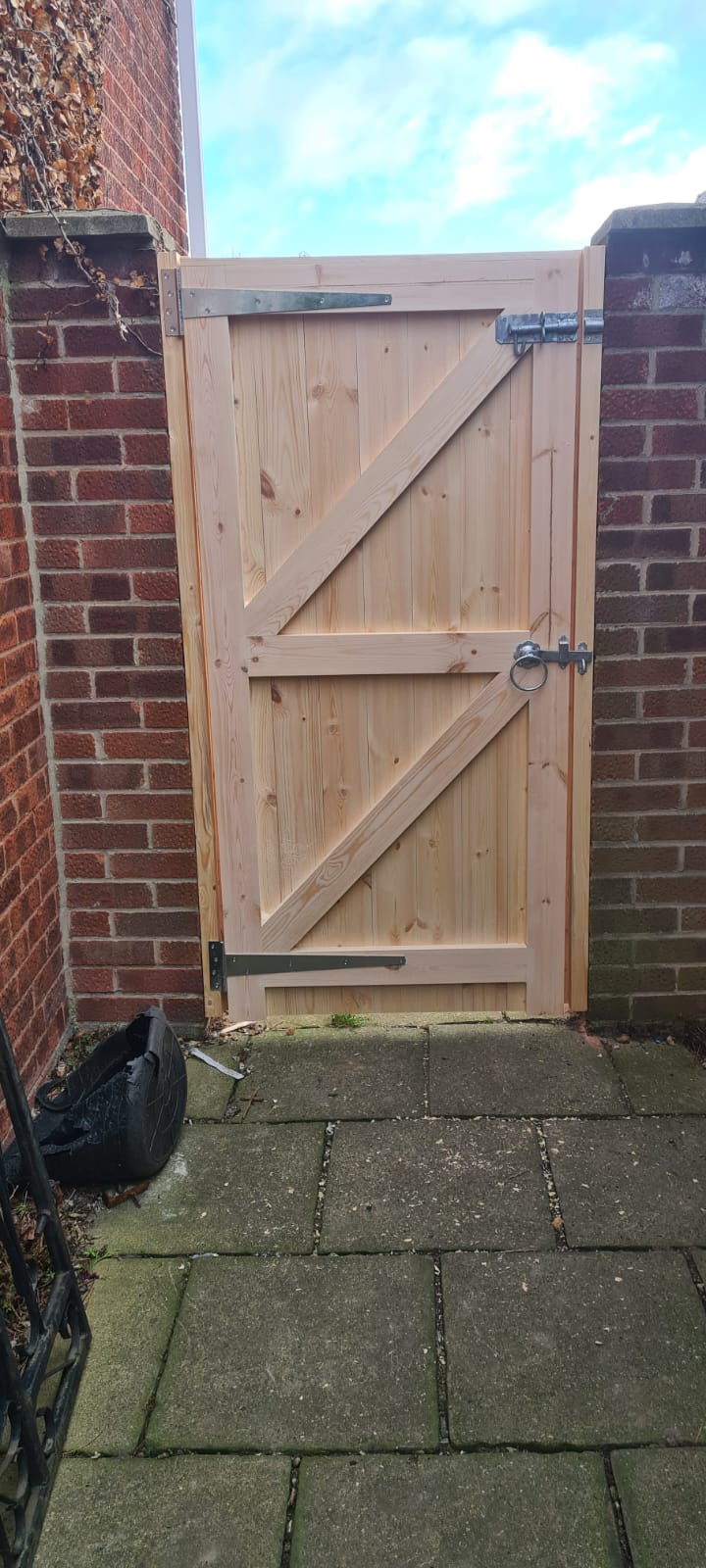
A sloping entrance can turn a straightforward gate installation into a problem of millimetres. Can gates open uphill? Yes, but a standard side-hung gate will not simply swing through rising ground beneath it. The gate needs enough clearance throughout its arc, and where the driveway or path rises in the direction of opening, that clearance quickly disappears.
The right answer depends on the steepness and direction of the slope, the width and weight of the gate, whether it is manually operated or automated, and how much adjustment is possible to the ground level. For many UK properties, rising hinges provide the most practical solution. On others, opening downhill, reshaping the surface, or choosing a sliding gate is the safer route.
Can gates open uphill with standard hinges?
Usually, no - not if the ground rises directly under the opening leaf. A conventional gate hinge holds the gate at a fixed height. As the leaf swings open, its bottom rail follows a level arc from the hinge post. If the driveway rises into that arc, the gate will catch on the surface before it reaches its intended opening position.
A small gradient may be manageable by setting the gate slightly higher, provided there is still a sensible gap beneath it when closed. This is often suitable for a garden gate where security and containment are not affected by a little extra clearance. It is less desirable for driveway gates, where a large bottom gap can look unfinished, reduce privacy, or allow pets through.
It is also worth checking the ground over the whole swing, not just at the closed and open positions. The tightest point can occur halfway through the gate’s travel. A paved drive that looks almost level can still have a high point exactly where the bottom corner needs to pass.
Rising hinges lift the gate as it opens
Rising hinges, often called uphill gate hinges, are designed to raise the gate leaf as it swings. The hinge pin or guide is set on an incline, so the gate climbs as it opens and gains the clearance it needs above the rising drive or path.
They can be an excellent option for a single pedestrian gate and for many manually operated driveway gates. They also bring a useful benefit on entrances that fall away from the property: the gate naturally settles back towards its closed position under its own weight. That can be helpful, but it is not a substitute for a proper latch or gate stop.
There are limits. The gate rises by a set amount over its swing, and the available lift must match the slope. A steeper drive may need more rise than a hinge system can safely provide. The gate will also feel heavier to open because the user is lifting part of its weight. On a wide, heavy pair of timber driveway gates, this can become inconvenient without careful design.
The hinge posts and fixings matter just as much as the hinges themselves. Lifting a gate creates different forces at the post, and a poorly supported post can move over time. For a lasting installation, use substantial posts set correctly for the ground conditions and choose ironmongery rated for the gate’s actual size and weight.
Measure the slope before ordering a timber gate
The most useful information is not simply that the drive slopes. A gate maker or installer needs to know which way it slopes in relation to the gate line and opening direction.
If the ground rises away from the gate line as the leaf opens, it is an uphill opening problem. If it falls away, the gate has increasing clearance as it opens, but may be prone to swinging quickly or standing open. If the slope runs across the entrance from one post to the other, double gates can be particularly awkward because each leaf may face different levels at the meeting point.
Before ordering, establish the clear opening between posts, the finished ground level at both posts, and the level of the ground along the full opening route. A long straightedge, string line and spirit level can give a useful initial picture. For a driveway gate, measure with the final surface in place where possible. Future block paving, gravel build-up or resurfacing can remove the clearance you allowed for.
Four checks prevent most expensive surprises:
Measure the width of each leaf, not only the overall entrance width.
Record the rise in ground level over the full swing of the gate.
Allow for the bottom rail, hinge clearance and any drop bolt.
Identify walls, banks, vehicles or other obstacles behind the open gate.
Photographs taken from inside and outside the entrance are also useful when discussing a made-to-measure gate. They show the practical details that measurements alone can miss, such as drainage channels, kerbs and changes in paving.
Options when your driveway rises behind the gates
Rising hinges are not the only answer. The best choice should suit how the entrance is used every day, rather than forcing a gate into an unsuitable layout.
Open the gates downhill instead
Where space allows, reversing the opening direction may solve the clearance issue immediately. Gates opening downhill have more room beneath them as they travel. The trade-off is control: a falling gate can gain momentum, particularly in wind or on a steeper slope. Good-quality hinges, stops, catches and a secure fastening point are essential.
Consider where an open gate will sit. It must not obstruct a footpath, road, parking area or vehicle turning space. Gates should normally be set back from the highway so a vehicle can wait clear of the road while the entrance is opened.
Alter the ground level locally
A shallow high spot can sometimes be reduced, or the approach surface regraded, to create the required swing clearance. This is often the neatest option where only a small amount of material needs to be removed.
Drainage needs proper thought before changing a drive. Water should not be directed towards the house, gate posts or neighbouring land. On gravel drives, remember that loose stone moves and can gradually reduce the gate’s working clearance. A defined, firm threshold below the gates is often easier to maintain.
Use a sliding gate where space permits
A sliding gate does not sweep across the driveway surface, so a slope under the entrance is far less of an issue. It does, however, need clear run-back space beside the opening, as well as a suitable track or cantilever arrangement. Sliding systems involve their own groundwork, support structure and maintenance requirements, so they are not automatically simpler or cheaper.
Reduce the leaf width or redesign the arrangement
Two narrower leaves can sometimes work better than one broad gate because each leaf has a shorter sweep. That said, a pair of gates still needs to meet cleanly at the centre and accommodate the changing ground level. A bespoke layout should be planned around the actual site rather than selected from a standard size chart.
Timber gates need stable construction on a slope
A slope puts no special strain on a gate while it is closed, but it can expose weak construction every time the gate is opened. A heavy leaf that twists, drops or moves at the joints will quickly lose its carefully set clearance.
For driveway and garden gates, look for properly engineered timber, strong mortice and tenon joinery, exterior-grade D4 adhesive and hardwood dowels. These details help a timber gate resist seasonal movement and repeated use. They are particularly worthwhile where the hinge arrangement is doing more work than normal, as with rising hinges.
The gate should be hung only after the posts are secure and the ground levels are final. Allow appropriate expansion gaps at the posts and between double leaves, then set the bottom clearance for the lowest point of the surface and the full swing of the gate. Do not assume a gate that clears when empty will still clear after a fresh layer of gravel or several winters of ground movement.
Finish and maintenance also have a part to play. Keep the timber protected with a suitable exterior treatment, inspect hinge bolts and latch alignment regularly, and clear leaves, stones and compacted mud from the opening area. Small obstructions matter more on a sloping entrance because the clearance is already limited by design.
What about automated uphill-opening gates?
Automation should be considered early, not added as an afterthought. Some rising hinge arrangements are unsuitable for certain gate operators because the gate’s movement is not a simple level swing. The operator must allow for both rotation and lift without binding, overloading or pulling the gate out of alignment.
A qualified gate automation installer can advise on compatible hinges, motors, safety devices and stops. This is especially important for heavy wooden driveway gates. Automated gates need suitable safety measures to protect people, pets and vehicles, along with reliable manual release provision in a power cut.
If the entrance has a notable incline, provide the installer with the proposed gate dimensions, weight, opening angle and site measurements before the gate is made. A little planning at this stage is far cheaper than altering finished timber gates, posts and paving later.
A well-made timber gate can work beautifully on a sloping drive, but it should be designed around the slope rather than asked to ignore it. Measure the full swing, choose the opening method honestly, and build the posts, hinges and gate leaf to do the job for years rather than one season.


Comments