

Timber Grades Guide for Stronger Wooden Gates
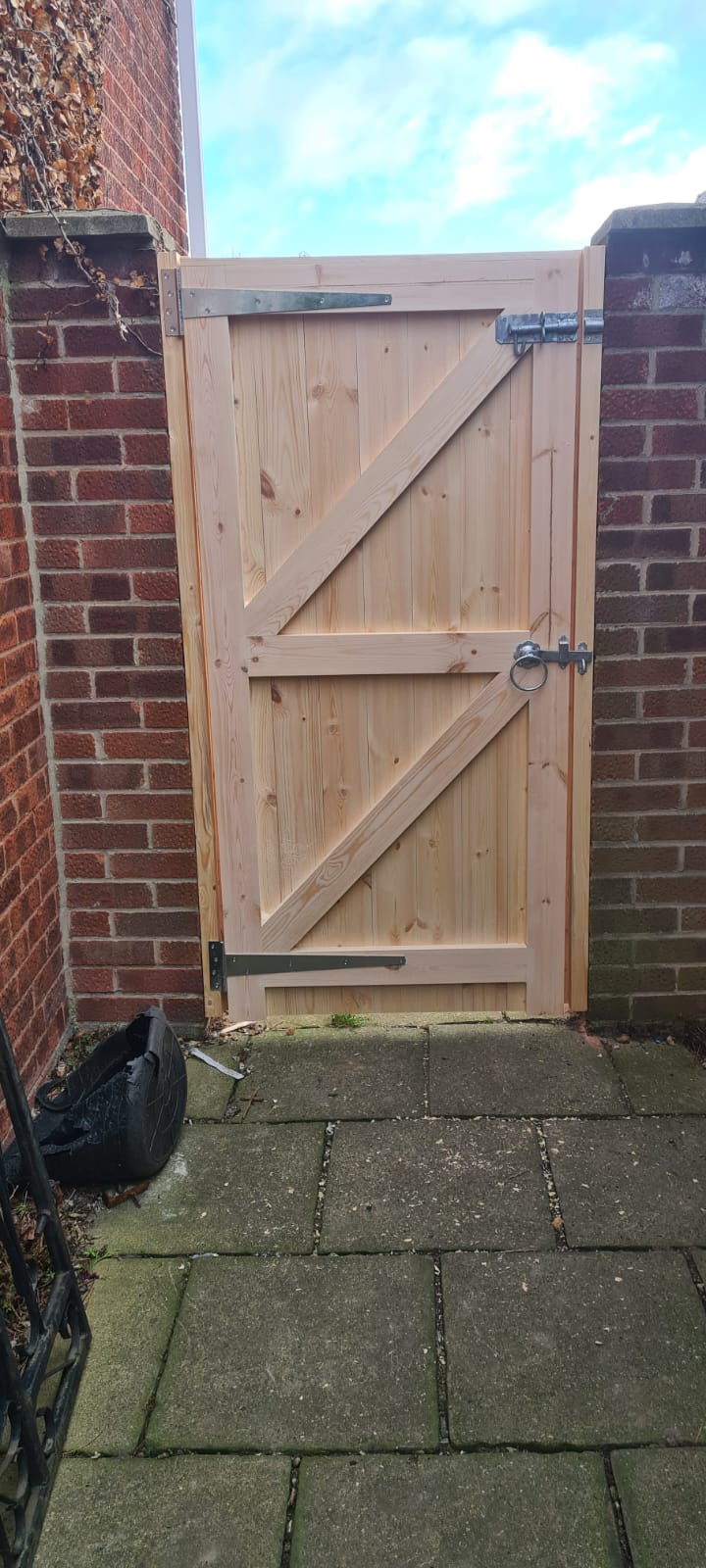
A wooden gate can look excellent on the day it is fitted and still cause trouble a season later if the timber has not been selected and built for exterior use. This timber grades guide explains what grades actually tell you, where they can mislead, and what matters most when choosing a driveway or garden gate.
For homeowners, the practical question is rarely whether timber has a knot or two. It is whether the gate will remain straight, take the weight of its ironmongery, cope with rain and sun, and continue to close properly. The answer depends on more than a grade stamp.
What timber grades really mean
Timber grading is a way of sorting boards according to visible features and, in some cases, tested structural performance. A grade may account for knots, grain direction, splits, wane, density and other natural characteristics that affect how the timber looks or performs.
The difficulty is that there is no single grade that means “best timber for gates”. Structural grades, appearance grades and supplier descriptions serve different purposes. A timber suitable for floor joists is not automatically the right choice for a gate stile, and a beautifully clear board is not automatically the most stable one.
For a made-to-measure exterior gate, the timber must be considered as part of the whole construction. Section sizes, joint design, moisture content, adhesive, fixings and finishing all have a bearing on the result.
Timber grades guide: the grades you may see
Structural grades: C16 and C24
C16 and C24 are common strength grades for softwood used in construction. The letter C refers to coniferous timber, while the number relates to its characteristic bending strength. C24 is generally stronger and stiffer than C16, with fewer or smaller defects permitted in the graded piece.
These grades are useful when timber is carrying a known structural load, such as in a roof, wall or floor. However, they should not be treated as a complete buying guide for wooden gates. A gate is a moving exterior structure, not a fixed joist. It needs well-proportioned rails and stiles, carefully selected material and joints that resist racking and seasonal movement.
C24 may be a sound option in some parts of a gate, but the label alone does not tell you how the timber has been dried, laminated, machined or joined. Nor does it guarantee a clean, furniture-like appearance.
Appearance and joinery grades
Joinery-grade timber is typically selected and machined for visible work such as doors, windows, mouldings and gates. It is usually straighter and more consistent in appearance than general construction timber, although standards and descriptions vary between suppliers.
You may also see terms such as unsorted, fifths, sixths, select or clear. These can indicate the expected amount of knotting and other visual characteristics, but they are not always directly comparable from one merchant to another. Ask what the description means in practice rather than assuming that a higher-sounding grade guarantees better outdoor performance.
A small, sound knot in the centre of a wide gate board may be perfectly acceptable. A large loose knot near a mortice, hinge position or narrow rail is another matter. Good workshop selection places timber according to the job it has to do.
Clear and knot-free timber
Clear timber has few or no visible knots. It offers a refined appearance and can be attractive where a painted or stained finish needs to look particularly uniform. Yet clear timber is not a shortcut to durability.
Straight grain, proper drying and stable construction often matter more than the complete absence of knots. Clear timber can also cost considerably more, and for many traditional gate designs a modest amount of sound knotting gives a more natural character without compromising the finished gate.
Species, grade and treatment are different things
These terms are often used together, but they describe different qualities. Species tells you what tree the timber came from. Grade tells you about its strength or appearance. Treatment helps protect susceptible timber from fungal decay and insect attack. None of them replaces the others.
For example, pressure-treated softwood may have good preservative protection, but treatment does not stop timber absorbing and releasing moisture. If a board is prone to movement, or if it has been used in a poorly designed gate, it can still twist, cup or shrink.
Similarly, hardwood is often naturally more durable, but it comes at a higher price and still requires careful construction and maintenance. It is not automatically the best value solution for every home.
Engineered timber takes a different approach. Suitable pieces are dried, selected and bonded together so that the grain direction and natural tensions are better balanced. When properly manufactured, this can provide a straighter, more stable component than a single wide piece of pressure-treated timber. For gates, where movement can affect gaps, latch alignment and hinge operation, that stability is valuable.
Why stability matters more on a gate
Timber naturally moves as humidity changes. In a fixed fence panel, modest movement may be barely noticed. On a gate, it can lead to rubbing at the ground, uneven gaps, a latch that no longer meets its keep, or pressure on hinges and posts.
The wider and heavier the gate, the more important it is to control movement. Driveway gates also deal with leverage: a substantial leaf hanging from a post puts constant force through the hinge side, while wind can add sudden loading. This is why material quality cannot be separated from the gate’s design.
A well-made gate should use timber sections suited to its span and weight, with rails and stiles joined securely. Traditional mortice and tenon joints give a large gluing and bearing area, rather than relying on screws driven into end grain. Exterior-rated D4 adhesive and hardwood dowels add further security where the joint is exposed to changing weather.
At Premier Timber Gates, engineered timber is used alongside these established joinery methods because a traditional-looking gate should not have to rely on traditional weaknesses.
How to judge timber for a wooden gate
Rather than choosing on grade alone, look at the following points together:
Straightness and grain: Timber should be straight, with sensible grain orientation and no major twist or bow. Grain running consistently through rails and stiles is generally preferable to short, irregular grain around stressed areas.
Defects in the right places: Sound knots can be acceptable, but loose knots, deep shakes, excessive wane and significant splits should not sit near joints, edges, hinges or latch positions.
Moisture control: Timber needs to be appropriately dried before manufacture. A gate made from overly wet material is more likely to move as it dries after installation.
Construction quality: Strong sections, mortice and tenon joinery, exterior adhesive and appropriate bracing do more for service life than an impressive grade label on its own.
Protection after fitting: Primer, paint, oil or another suitable exterior coating protects the surface and helps slow moisture movement. Cut ends, joints and lower edges deserve particular attention.
These factors work together. A lower-cost softwood, carefully engineered and properly finished, can be a sensible long-term choice. Equally, an expensive timber can disappoint if it is poorly joined, undersized or left without maintenance.
Matching the timber to the gate’s job
A small side gate has different demands from a pair of wide driveway gates. A painted garden gate may prioritise a smooth, consistent face, while a country-style entrance gate may suit selected natural knots and a more traditional look.
Where privacy boards create a large solid surface, wind loading becomes a bigger consideration. Open designs allow air to pass through more freely, but still need firm joinery and adequate posts. If your opening is unusually wide, sloping or exposed, made-to-measure sizing is worth considering because standard gate proportions may not suit the job.
It also pays to think beyond the gate leaf. Posts must be substantial enough for the gate weight and ground conditions, hinges must be correctly rated, and clearance at the bottom must allow for the surface beneath. The best timber grade cannot compensate for undersized posts or poorly set hinges.
The questions worth asking before you buy
Ask what timber is used, whether it is engineered or solid, and how it is dried and selected. Ask how the frame is joined, what adhesive is used and whether the gate is supplied ready for your chosen finish. These are more useful questions than simply asking whether the timber is “premium grade”.
For a painted finish, ask whether a suitable primer is available and whether all faces and edges should be coated before fitting. For an oiled or stained finish, ask how often it will need refreshing in your location. A sheltered gate and one facing driving rain will not weather in the same way.
The right timber is the timber that suits the design, exposure, budget and level of maintenance you are prepared to give it. Choose a gate built from stable, carefully selected material with proper joinery, then protect it well from the start. That is the sounder route to a gate that continues to look right and work properly for years.


Comments