

What a Wooden Gate Lifespan Really Depends On
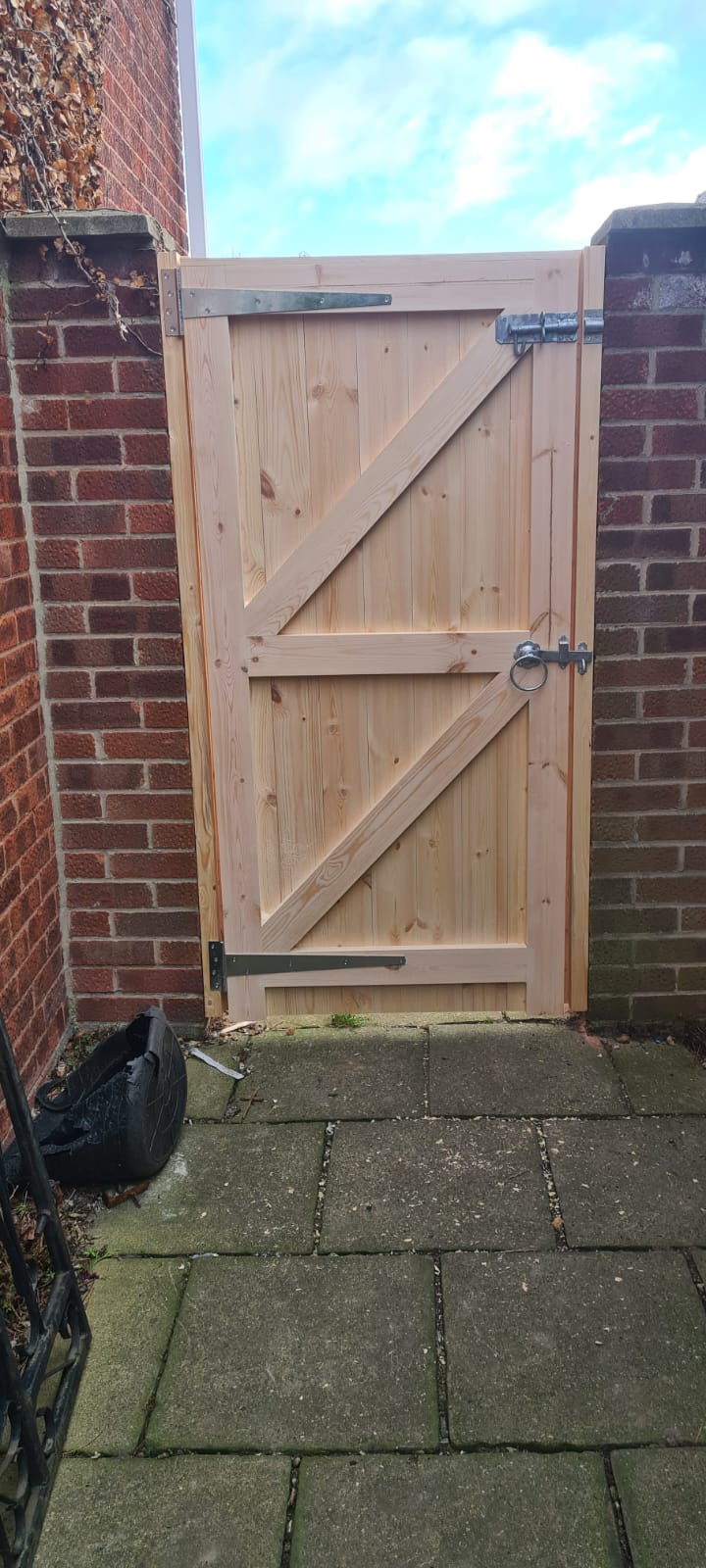
A timber gate can look excellent on the day it is fitted yet start to twist, sag or split far sooner than expected. The difference is rarely down to looks alone. Wooden gate lifespan is determined by the timber itself, the way it has been constructed, how it is hung and how well it is protected from the British weather.
For a homeowner choosing a new driveway or garden gate, the useful question is not simply, “How many years will it last?” It is, “What has been done to give this gate the best chance of staying straight, strong and serviceable?” A properly made and maintained softwood gate can provide many years of good use. A poorly built gate can become troublesome after only a few wet winters.
How long should a wooden gate last?
There is no single honest answer, as gates live very different lives. A sheltered pedestrian gate that is opened a few times a day will face far less strain than a pair of wide driveway gates exposed to wind, rain and regular vehicle access.
As a broad guide, a well-made timber gate that is correctly installed and maintained can commonly give 10 to 20 years of dependable service, often longer where conditions are favourable. Gates that receive little protection, are fitted with inadequate hardware or are left without maintenance may have a far shorter working life.
It is also worth separating structural lifespan from cosmetic appearance. Paint or oil may need refreshing well before the gate itself needs replacing. Surface weathering, small movement and a faded finish do not necessarily mean the timber is failing. Rot around joints, persistent sagging, loose rails or decay at the bottom of the gate are more serious signs.
The timber has a major bearing on lifespan
Not all softwood gates are made from the same material. Many low-cost gates use pressure-treated timber, which can be suitable for some applications but may still be prone to movement as it dries and responds to changing moisture levels. Wide boards and weak framing can make that movement more noticeable.
Engineered timber is designed to improve stability. By laminating selected timber sections together in opposing grain directions, it helps reduce the natural tendency for wood to cup, bow and twist. This matters particularly on larger gates, where even a small amount of movement can affect gaps, latching and alignment.
Engineered softwood also offers a sensible balance for many UK homes. It provides a more stable, carefully constructed option than basic pressure-treated timber without moving into the considerably higher cost of hardwood. That does not mean it is maintenance-free. Timber is a natural material, and every timber gate needs protection from moisture and sunlight. It does, however, give the gate a stronger starting point.
Why construction matters as much as timber
A gate is only as sound as the joints holding it together. Staples, thin screws and butt-jointed frames may be quick to assemble, but they are not a substitute for proper joinery in a gate that will spend its life outdoors.
Mortice and tenon joints create a positive mechanical connection between rails and stiles. When combined with exterior-grade D4 adhesive and hardwood dowels, they form a frame built to resist the repeated forces of opening, closing, wind pressure and seasonal movement. This is traditional gate-making for a practical reason: it works.
The layout of the gate matters too. A well-positioned diagonal brace transfers weight back towards the hanging side, helping prevent the outer corner from dropping. On a pair of driveway gates, proportion, bracing and suitable timber section sizes become even more important. A gate that is under-built for its width may look fine initially but will be working against its own design from the first day.
Fitting can shorten or extend a wooden gate lifespan
Even the best handmade gate will struggle if it is fitted to weak posts or hung on undersized hinges. Gate posts take the full load of the gate as well as the leverage created every time it opens. They need to be substantial, properly set and appropriate for the size and weight of the gate.
For driveway gates, allow for the greater load and the possibility of wind catching a broad solid panel. Adjustable hook and band hinges are often a practical choice because they provide strong support and allow for fine adjustment after fitting. The hinge fixings must be long and strong enough for the post and gate construction, not simply selected because they are the cheapest option on the shelf.
Ground clearance is another detail that is easily overlooked. A gate should not scrape on gravel, paving or a rising drive. Timber can take on moisture at its most vulnerable lower edge, so leaving sensible clearance above the ground helps keep that area drier and prevents unnecessary wear.
Make sure the gate can close without being forced into line by the latch. A latch should secure a correctly aligned gate, not pull a sagging one back into position every day. If a gate begins to catch or drop, deal with hinge adjustment early. Small corrections are much easier than repairing damage caused by months of strain.
Weather protection is not optional
The UK climate asks a great deal of exterior timber. Rain, frost, damp air, strong sun and repeated wet-and-dry cycles all affect a gate's finish and moisture content. The exposed top edges, end grain and lower sections are particularly vulnerable.
A suitable exterior primer and topcoat, or a quality exterior wood oil where an oiled finish is preferred, slows moisture ingress and helps protect the surface from UV damage. The right choice depends on the appearance you want and the time you are willing to give to maintenance. Painted gates offer solid coverage and colour choice, while oils can enhance the grain and are often straightforward to refresh. Neither approach removes the need for regular inspection.
Finish all faces of the gate, including edges and any areas that will be difficult to reach after installation. End grain deserves particular care because it absorbs moisture more readily than the face of the timber. If a gate is cut or drilled during fitting, seal the fresh timber before leaving it exposed.
A gate should be coated before it has been weathered bare. Once water has repeatedly entered the timber, restoring a lasting finish becomes more difficult. A quick annual check is usually far more economical than waiting for peeling paint, black staining or soft areas to appear.
A practical maintenance routine
A wooden gate does not need constant attention, but it should not be forgotten after installation. Twice a year, ideally after winter and again before the wetter months, take a few minutes to look over the gate, posts and hardware.
Check that hinges remain tight, the latch closes freely and the gate is not rubbing on the ground. Look closely at joints, lower rails, bottom edges and post bases for cracks that have opened up, worn finish or signs of trapped moisture. Clear leaves, soil and climbing plants away from the bottom of the gate. These hold damp against the timber and restrict airflow.
Recoat when the finish starts to look thin or water stops beading on the surface. How often this is needed depends on exposure. A shaded gate facing driving rain may need attention more often than one protected by a porch, wall or mature hedge. Do not assume one maintenance schedule suits every property.
For gates near the coast, on exposed rural sites or in particularly damp locations, expect a more demanding maintenance programme. Salt-laden air, persistent wind and heavy rainfall can age both timber finishes and ironmongery faster. Choosing quality materials at the outset becomes even more worthwhile in these settings.
Signs that a gate needs attention
Movement in timber is normal, especially through the first seasons after fitting. A small seasonal change in gaps is not usually a cause for concern. What deserves attention is movement that affects operation or indicates water is getting into the structure.
Watch for a gate that no longer latches without lifting, hinges pulling away from the post, joints opening noticeably, or softness around the bottom rail and stiles. Surface splits should be assessed rather than ignored, particularly if they lead towards a joint or allow water into an end grain area. Early repair, adjustment and refinishing can often prevent a local issue becoming a replacement job.
When ordering a new gate, provide accurate opening measurements and be clear about whether it will be a pedestrian gate, a single driveway gate or a pair. The intended use, exposure and available post size all influence the right construction and ironmongery. Made-to-measure work is valuable here because the gate can be built for the opening rather than forced to suit a standard size.
A timber gate earns its lifespan through sound materials, proper joinery, careful fitting and straightforward upkeep. Choose a gate built for the job, protect it before the weather gets to work, and it can remain a useful, handsome part of your property for many years.


Comments