

What Wooden Gate Prices Should You Expect?
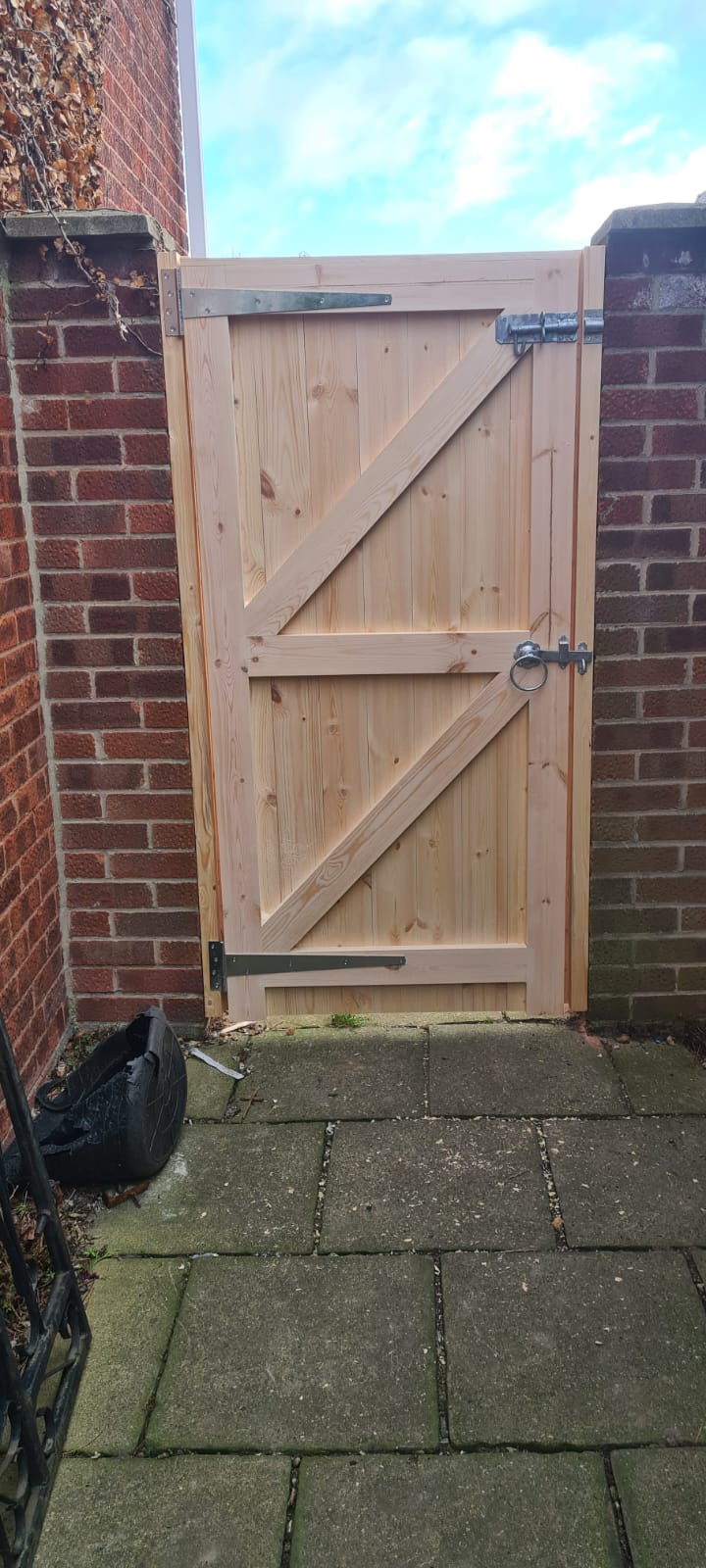
A gate that looks inexpensive on a screen can become a costly purchase once you add posts, hinges, latches, delivery and the work needed to make it fit. Wooden gate prices are best judged as the cost of a complete, properly sized entrance - not simply the price shown beside the gate itself.
For a garden gate, side gate or pair of driveway gates, the right budget depends on the opening, the design, the timber construction and whether standard sizes will genuinely work for your property. A well-made softwood gate should offer a sensible middle ground: a traditional appearance and strong construction without the premium cost of hardwood.
What affects wooden gate prices?
The largest influence is usually size. A small pedestrian gate uses less timber and needs lighter ironmongery than a wide pair of driveway gates. As gates become wider or taller, they require stronger rails, careful bracing and substantial posts to carry their weight without movement.
Design matters too. A simple framed ledged gate is usually more economical than an arched top, closeboarded privacy gate or a decorative driveway design with shaped heads and detailed infill. This does not make a simpler gate a poor choice. For many side entrances and practical garden boundaries, a straightforward traditional design is exactly what is needed.
Bespoke sizing also affects the final figure, but it can save money and trouble in the longer term. Forcing an off-the-shelf gate into an awkward opening often means packing out gaps, cutting the gate down or altering the posts. A made-to-measure gate is built around the opening and the clearance required for hinges and latches, giving a neater finish from the outset.
Timber quality is not just a sales detail
Two gates can look similar when new yet perform very differently after several wet winters. The species and quality of timber, how it has been prepared, and how the gate is assembled all influence value.
Pressure-treated timber is widely available and can be suitable for basic fencing work. However, treatment alone does not prevent the natural movement that can cause ordinary boards to twist, cup or split. A gate is a moving structure, so stability matters more than it does in a fixed fence panel.
Engineered timber construction is designed to address this. By laminating carefully selected sections of timber, movement is reduced and the finished components are more stable. It provides a strong, attractive alternative to hardwood while keeping wooden gate prices within reach for homeowners who want something built for regular use.
At Premier Timber Gates, handmade gates are made with mortice and tenon joinery, exterior-grade D4 glue and hardwood dowels. These details take more workshop time than a lightly framed, screwed-together gate, but they are the parts that help keep the structure square and sound. When comparing quotations, it is worth asking how the joints are made, rather than comparing timber thickness alone.
Expect to budget for the whole gate job
A gate rarely works as a standalone purchase. If you are replacing a gate between sound existing posts, the main additional costs may be hinges, a latch and finish. If the posts are leaning, undersized or rotten at ground level, replacing them before fitting a new gate is usually the wiser option.
For a complete installation, allow for the gate or gates, timber or metal posts, hinges, latch or locking hardware, fixings, preservative or oil, delivery and fitting if you are not installing it yourself. Driveway gates may also need a drop bolt, centre stop, adjustable hinges and, in some cases, automation equipment.
Do not choose ironmongery as an afterthought. Heavy gates on light hinges can sag, scrape the ground and put unnecessary strain on the timber. Good-quality galvanised or black hardware sized for the gate weight is a modest investment compared with correcting a poorly hung gate later.
Typical price differences by gate type
A single garden or side gate is generally the most affordable option because it has a smaller span and straightforward hardware. It is often the right choice where privacy, pet security or access to bins and a rear garden is the priority.
A tall closeboarded gate costs more than an open barred design because it uses more material and catches more wind. That extra wind loading needs to be considered when selecting posts and hinges. In an exposed location, a solid six-foot gate may need stronger support than expected.
Driveway gates sit at the higher end of the range, especially when they are made as a matching pair. They need accurate matching, reliable meeting points and sufficient strength across a much wider opening. Curved tops, sweeping shoulders, decorative vertical boards and bespoke detailing increase workshop time, but they can transform the frontage of a home.
Gate kits can offer good value where the opening is standard and you are confident fitting the gate yourself. They are particularly useful when you want the convenience of matching posts and hardware without gathering each component separately. For unusual openings, sloping ground or matching an existing boundary, a bespoke quotation is usually more reliable.
When a cheaper gate can cost more
The cheapest option is not always poor value, and not every property needs a fully bespoke gate. A light garden gate in a sheltered position may be perfectly well served by a simpler design. The issue comes when a low-cost gate is asked to do a demanding job it was not built for.
Common warning signs are thin rails, staple-fixed boards, weak diagonal bracing and joints held together mainly by screws. These gates may look tidy at first, but a wide or exposed gate can soon show strain. Once it drops or twists, the latch no longer lines up, gaps appear and the gate becomes frustrating to use.
A better approach is to match the specification to the job. Spend where it counts: stable timber, proper joinery, adequate post size and hardware that suits the weight. Keep the design simpler if the budget is tight. A plain, strongly built gate will usually outlast a more decorative gate made to a lesser standard.
How to compare wooden gate prices fairly
Before requesting prices, measure the opening in several places. Older walls and posts are rarely perfectly parallel. Note the narrowest width, the height you want, whether the ground rises across the entrance and which way the gate needs to open. A photograph of the opening and surrounding area is also useful when discussing a made-to-order gate.
Then compare like for like. Check whether the quote includes a single gate or a pair, posts, ironmongery, finishing products and delivery. Confirm the finished gate size, not just the structural opening size. A gate needs sensible clearance for seasonal movement and for reliable operation.
Ask about timber construction and joints, particularly for driveway gates or any gate over average width. It is also sensible to establish whether the timber arrives ready for finishing or already treated, and what ongoing care is recommended. Exterior timber benefits from regular inspection and a suitable protective finish, especially on exposed faces, top edges and end grain.
Choosing value rather than a headline price
Wooden gates are part of the first impression of a property, but they also get opened, shut, leaned on and exposed to every change in British weather. The best purchase is one that suits the opening, carries its own weight properly and can be maintained without difficulty.
If your opening is non-standard, your driveway is wide, or you want a gate built to match the character of your home, a handmade quotation gives you a clearer basis for comparison than a generic price label. Choose the construction and fitting details with as much care as the style, and your gate should remain a dependable part of the property for years to come.


Comments