

Why Choose Bespoke Wooden Gates for Your Home?
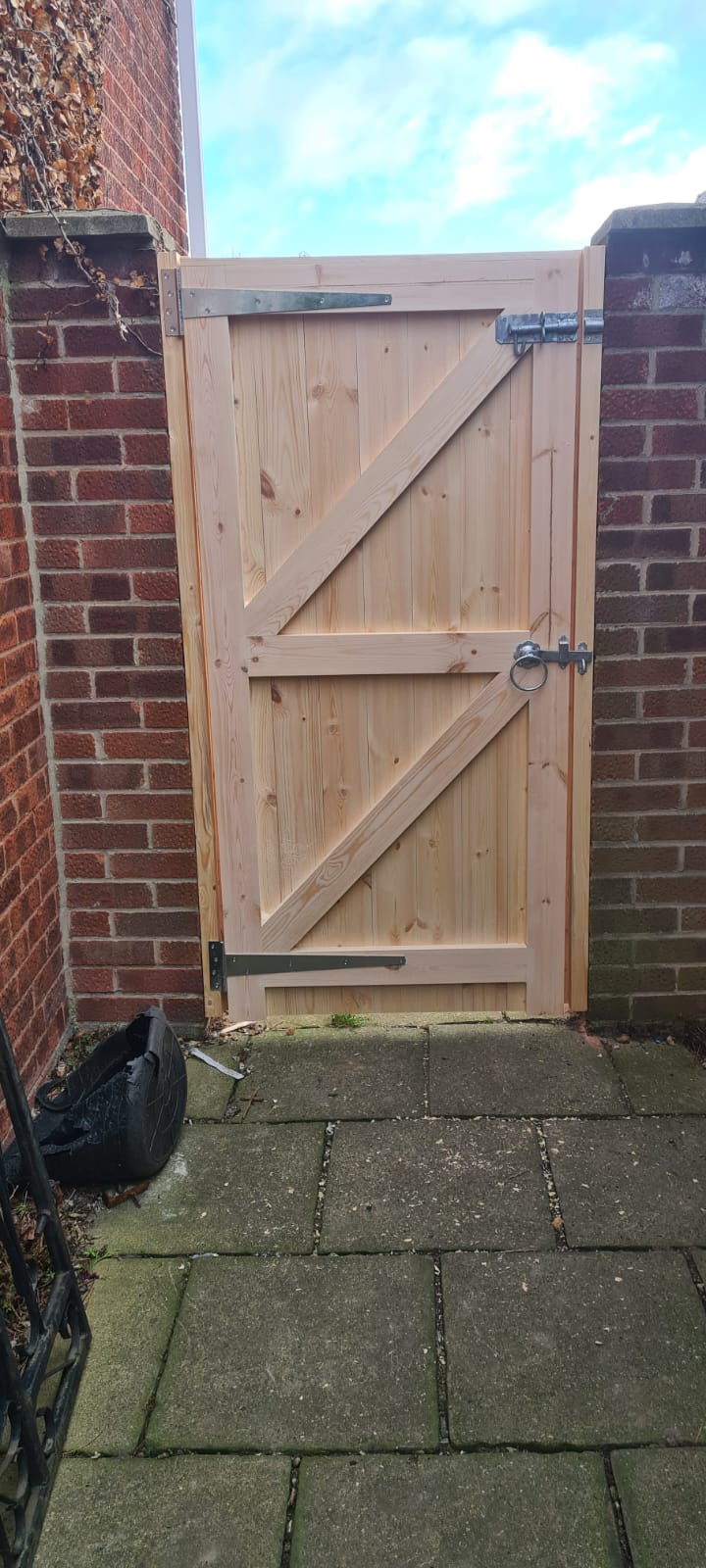
A gate has to do more than mark the edge of a property. It needs to suit the opening, work reliably through wet British winters, provide the right level of privacy and look at home with the house behind it. That is why choose bespoke wooden gates is a question worth asking before settling for an off-the-shelf size. A properly made gate is built around your entrance, rather than asking you to alter the entrance to fit the gate.
For a driveway, side passage or garden entrance, made-to-order timber gives homeowners more control over the details that affect both appearance and service life. From the overall width and height to the board layout, rail position and hardware, each decision can be made for the property rather than a warehouse shelf.
Why choose bespoke wooden gates over standard sizes?
The most obvious benefit is fit. Few existing openings are exactly the same, particularly on older homes where walls, posts and paths may have moved or been altered over time. A standard gate can leave awkward gaps, require packing pieces or force a compromise on the width of a path or drive. Bespoke gates can be made to the measurements required, allowing sensible clearance for opening, closing and seasonal movement in the timber.
This matters even more with driveway gates. A pair of gates needs to meet neatly in the middle, hang squarely and allow room for hinges, posts and a latch or drop bolt. If the proportions are wrong, the finished entrance can look like an afterthought. A gate made for the opening gives the property a cleaner, more deliberate finish.
Bespoke sizing also helps when the job is not straightforward. You may need a narrow side gate that keeps pets secure without blocking access for bins, a tall garden gate for privacy, or an entrance with sloping ground. A specialist manufacturer can account for these practical points during the design stage. It is usually simpler and more economical than adapting a mass-produced gate after it arrives.
A stronger gate starts with how it is made
Good timber is only part of the story. The way a wooden gate is joined determines how well it stands up to use, weather and its own weight. Gates are under constant stress from opening and closing, and wide driveway leaves place real strain on the joints and hinges.
Traditional mortice and tenon joinery is well suited to this work. The timber members lock together mechanically, rather than relying on screws through the face of the frame. When combined with exterior-grade D4 adhesive and hardwood dowels, it creates a solid frame designed for exterior conditions. It is a construction method with a long history because it works.
This is one area where a cheaper gate can prove false economy. Light frames, basic butt joints and thin boards may look acceptable at first, but they are more likely to loosen or twist as the seasons change. Repairs are rarely as neat or as long-lasting as getting the construction right from the beginning.
The design should also match the scale of the gate. A small pedestrian gate has different demands from a heavy pair of driveway gates. Rail sizes, bracing, boarding and hinge positions need to be chosen with the gate's weight and use in mind. There is no single construction detail that suits every opening, which is another reason made-to-measure work has a clear advantage.
Engineered timber offers a sensible balance
Homeowners often assume hardwood is the only route to a durable wooden gate. Hardwood can be an excellent material, but it comes at a significant cost and is not always necessary for a well-made residential gate. The better comparison is not simply softwood versus hardwood. It is the quality and stability of the timber, the construction and the care given after fitting.
Engineered timber is selected and built up to improve stability. This helps reduce the natural tendency of timber to cup, bow or twist as moisture levels change. No wooden gate is completely immune to movement - timber is a natural material and the British climate is demanding - but engineered construction provides a more stable basis than many pressure-treated alternatives.
For many homes, this offers the right middle ground: the character and warmth of timber, engineered for dependable performance, without the price of a full hardwood gate. The key is to use a gate designed for the job, not a decorative panel expected to carry the load of an entrance.
Design the gate around the property
Wooden gates work with a wide range of homes because timber can be both traditional and simple. A framed ledged gate can suit a cottage garden, while a clean boarded design can complement a newer property. The best choice is not necessarily the most elaborate one. It is the one that balances security, privacy, light and the surrounding architecture.
A solid boarded gate offers greater screening for a side entrance or garden, but it also catches more wind. In an exposed location, that extra wind loading must be considered when choosing posts, hinges and the size of the gate leaf. A more open design may be the sensible option where wind regularly funnels through a driveway or across a garden.
Height is another decision with practical consequences. A higher gate can improve privacy and help contain children or dogs, but it will be heavier and may be subject to local planning considerations in some positions. Gates beside a highway, for example, can have different restrictions from gates within a rear garden. Checking this before ordering avoids an unwelcome alteration later.
Bespoke work allows small details to be resolved properly. You can align the top of a gate with existing fencing, choose a curved or flat top, set the spacing between boards and make sure the proportions suit the brickwork, stonework or boundary wall. These choices are not merely cosmetic. They are what make a new gate look as though it belongs to the property.
Posts and ironmongery are part of the job
Even the finest handmade gate will not perform well on weak posts or unsuitable hinges. Gates should be treated as a complete installation, with the supporting structure and ironmongery matched to their size and weight.
For larger gates, substantial gate posts and heavy-duty adjustable hinges are often the sensible choice. Adjustable fittings allow for fine alignment during installation and give more scope for later adjustment if the ground settles or the timber takes up seasonal movement. Latches, bolts, catches and locks should be selected according to how the gate will be used, whether that is a regularly used garden entrance or a driveway secured each evening.
It is also worth thinking about the opening direction before ordering. A gate needs clear space to swing, should not obstruct a pavement or path, and must work with the fall of the ground. Where a drive slopes sharply, a sliding solution or altered ground level may be more appropriate than a conventional swinging gate. Honest advice at the measuring stage is better than forcing a gate into a layout that does not suit it.
Finishing and maintenance protect the investment
Wooden gates need care, but this should not put homeowners off. A good finish protects the surface from moisture and sunlight while allowing the natural grain to remain part of the appeal. Primers, oils and suitable exterior coatings all have different roles, so the right system depends on the timber and the finish you want.
Before fitting, every cut edge, end grain and concealed face should receive attention. End grain absorbs moisture readily, and neglecting it can shorten the life of an otherwise well-made gate. Once installed, inspect the finish regularly, especially after winter, and recoat before the surface becomes dry, worn or patchy.
Maintenance also includes the hardware. Check that hinges remain secure, moving parts are lubricated where appropriate, and the gate still clears the ground. A small adjustment made early can prevent rubbing, strain on the frame and damage to the finish. Timber gates reward routine care with many years of useful service and a finish that improves rather than fades into the background.
The value is in the finished result
Bespoke does not have to mean extravagant. It means paying for the right dimensions, sound materials and construction that reflects how the gate will actually be used. There will be cases where a standard gate is sufficient, particularly for a simple, sheltered opening with common dimensions. But when the entrance is prominent, unusually sized or expected to work hard every day, a tailored gate is usually the better long-term decision.
At Premier Timber Gates Ltd, handmade production, engineered timber and traditional joinery are used to give homeowners that balance of strength, appearance and sensible value. The most useful starting point is a clear measurement of the opening, an honest assessment of the site and a gate design that you will still be pleased to come home to years from now.


Comments