

12 Double Driveway Gate Ideas for UK Homes
A pair of gates can change the whole approach to a property. The best double driveway gate ideas do more than fill a wide opening: they set the tone from the road, provide privacy where it is needed and give vehicles enough room to come and go without fuss. For a country cottage, a period terrace or a modern family home, the right design needs to suit both the property and the practical demands of daily use.
Start with the opening, not the style
It is tempting to choose a gate from a photograph, but the opening should lead the decision. Measure the clear gap between the proposed gate posts, then consider the swing space inside the drive, the gradient, and whether cars need to pass through at an angle. Double gates divide the opening into two leaves, so a very wide entrance can remain manageable without one oversized, heavy gate.
A made-to-measure pair also avoids the compromises of forcing standard-sized gates into an awkward space. Allow for hinges, clearances and the gap between the two leaves, particularly where the drive falls away from the road. A gate that looks right but catches on gravel or slopes into the road will quickly become a daily irritation.
12 double driveway gate ideas to suit your home
1. Traditional five-bar gates
Five-bar gates are a dependable choice for rural homes, farms and properties with open views. Their horizontal rails create a familiar country appearance without blocking sightlines across a front garden or field. They are also a sensible option where wind exposure is a concern, as the open design lets air pass through rather than putting constant pressure on the hinges and posts.
Choose a matching pair for a balanced entrance, with a central meeting stile and strong drop bolt to hold the gates closed.
2. Closeboard gates for privacy
Where a driveway faces a busy pavement or neighbouring properties, closeboard double gates provide a more enclosed boundary. Vertical boards offer excellent privacy and a solid, traditional look that works particularly well with timber fencing.
The trade-off is wind loading. A fully boarded gate needs substantial posts, correctly sized hinges and sound construction. It is worth choosing engineered timber and proper framed joinery rather than a lightweight boarded panel, especially on a broad opening.
3. Arched-top gates for a softer entrance
An arched top gives a driveway entrance a more welcoming profile than a straight, square line. A gentle rise can complement older brickwork, stone walls and homes with curved garden features, while a pronounced arch makes more of a statement.
For the neatest result, the curve should continue naturally across both leaves when the gates close. This is one area where bespoke manufacture makes a noticeable difference, as the proportions can be set to the actual width and height of the entrance.
4. Flat-top gates with a clean, modern finish
A flat-top design is simple, tidy and adaptable. It suits contemporary homes, renovated properties and entrances where the gate should look smart without becoming overly decorative. Vertical boards or evenly spaced slats can be used within a square frame to create either a private or more open effect.
This style also sits comfortably alongside rendered walls, modern brick and metal fencing. Keep the ironmongery straightforward in black or galvanised steel to preserve the clean lines.
5. Curved or concave-top gates
A concave top, dipping gently towards the centre, creates a more formal look and can make a wide entrance feel less imposing. It is particularly effective between brick pillars or on properties with established gardens, where a hard horizontal top line may feel too severe.
The lower centre should still leave suitable clearance for vehicles and visitors. Design should never reduce the usable opening simply for appearance.
6. Framed ledge-and-brace gates
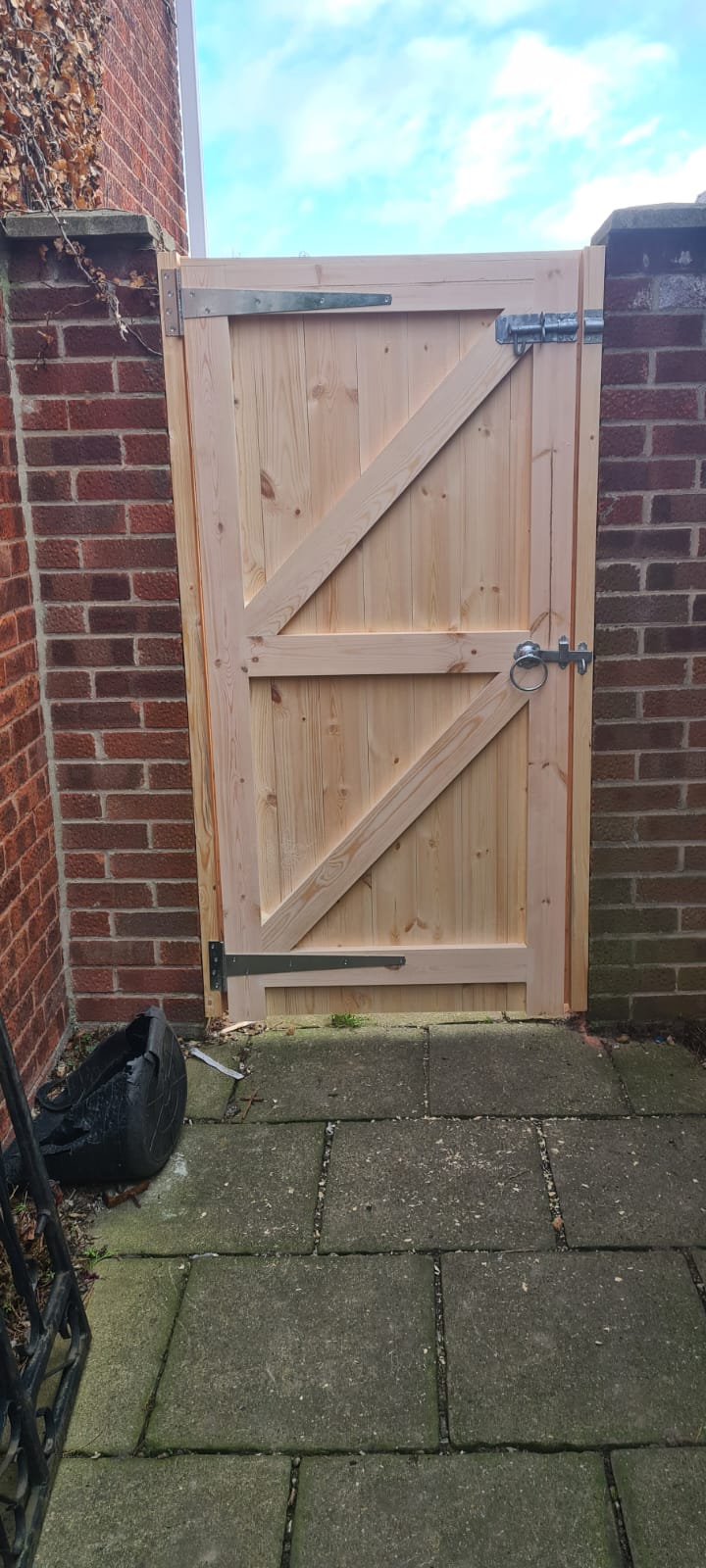
For a solid, traditional character, framed ledge-and-brace double gates are hard to beat. Diagonal braces help support the weight of the timber and create a recognisable handcrafted appearance. They suit cottages, period homes and properties where the driveway gate should feel established rather than overly polished.
The direction of the braces matters. They should rise from the lower hinge side towards the centre of each gate, helping transfer weight back towards the hinge side rather than allowing the outer corners to drop.
7. Vertical slatted gates with spacing
Slatted gates offer a useful middle ground between complete privacy and an open five-bar design. Narrow gaps between boards let light through and reduce wind resistance while still screening the drive from casual view. They can look crisp and modern, but their appeal is not limited to new builds.
Spacing needs careful thought. Wider gaps feel lighter and show more of the property beyond, while closer spacing gives better privacy. For homes on a busy road, a small gap is usually the better compromise.
8. Boarded gates with a top rail detail
A plain boarded gate can be improved with a shaped top rail, a cap rail or a small section of open trellis-style detail at the upper edge. This softens an otherwise solid design and can echo garden gates or fence panels nearby.
Use open detail sparingly on a driveway gate. A wide decorative section may weaken privacy and add maintenance points, whereas a simple top treatment gives enough character without complicating the build.
9. Gates to match existing fencing
Matching the gate to boundary fencing brings order to the front of a property. Closeboard fencing can lead into closeboard gates, while post-and-rail boundaries naturally suit five-bar designs. This does not mean every element must be identical, but shared timber colour, board direction or rail spacing creates a deliberate finish.
If the fencing is older, avoid making a new gate look artificially weathered. A well-built timber gate will settle into its surroundings over time with proper finishing and care.
10. Low double gates for open front gardens
Not every driveway needs a tall barrier. Low timber gates can define an entrance, keep children and pets within the garden, and add kerb appeal without closing off the property. They work well where visibility is desirable or where planning considerations favour a lower frontage.
A lower pair can still be substantial. Good rails, mortice and tenon joints, exterior-grade D4 glue and hardwood dowels all matter, even when the gate is not especially tall.
11. Taller gates for security and screening
For side drives, rear access points or homes requiring more privacy, taller double gates offer a stronger boundary. A full-height boarded design can screen bins, parked vehicles and garden areas from view while making unwanted access less inviting.
Before choosing height, check local planning requirements and the position of the entrance in relation to the highway. Gates opening onto a public road need particular care, as they should not swing out across the pavement or carriageway.
12. Double gates designed for automation later
Even if you plan to open the gates by hand at first, it can be wise to prepare for automation during installation. Strong posts, correctly positioned hinges, underground ducting for cables and enough space for motors will keep options open.
Automated gates should not be treated as an afterthought. Their weight, stopping points, safety devices and method of use all need proper planning. A well-built manual gate can be suitable for automation, but the posts and ironmongery must be up to the job.
Construction details that make a difference
A handsome design will not stay handsome if it twists, sags or opens poorly after a wet winter. Timber choice and joinery are just as important as the gate style. Engineered timber is a strong practical choice for driveway gates because it is designed for improved stability compared with ordinary pressure-treated timber, while remaining more affordable than hardwood.
Look for framed construction rather than thin boards fixed to a basic backing. Mortice and tenon joints form a proven, durable connection between rails and stiles. When combined with exterior-grade adhesive and hardwood dowels, they give the frame the strength needed for regular use and changing British weather.
Posts deserve equal attention. Heavy double driveway gates place considerable strain on their supports, so undersized or poorly set posts can spoil even the best-made gates. Post size, ground conditions and gate weight should be assessed together. In exposed locations or on especially wide openings, stronger posts and heavier-duty fittings are often the sensible investment.
Choose finishes and ironmongery for everyday use
The finish affects both appearance and maintenance. A painted gate can complement window frames, doors or rendered walls, while oil allows the grain to remain visible and gives a more natural timber look. Either needs upkeep. South-facing gates and exposed sites will generally need attention more often than sheltered entrances.
Ironmongery should suit the gate weight and how it will be used. Adjustable hook and band hinges make it easier to fine-tune the hanging of timber gates. A centre latch, drop bolts and a stop on the drive surface help hold the pair securely in place. For a gate that is opened several times a day, ease of operation matters as much as decorative detail.
The most successful driveway entrance is one you barely have to think about after it is fitted. Choose a design that suits the house, give the structure and posts the attention they deserve, and your double gates can provide a strong, welcoming first impression for many years.


Comments