

Gate Posts: Choosing the Right Foundation
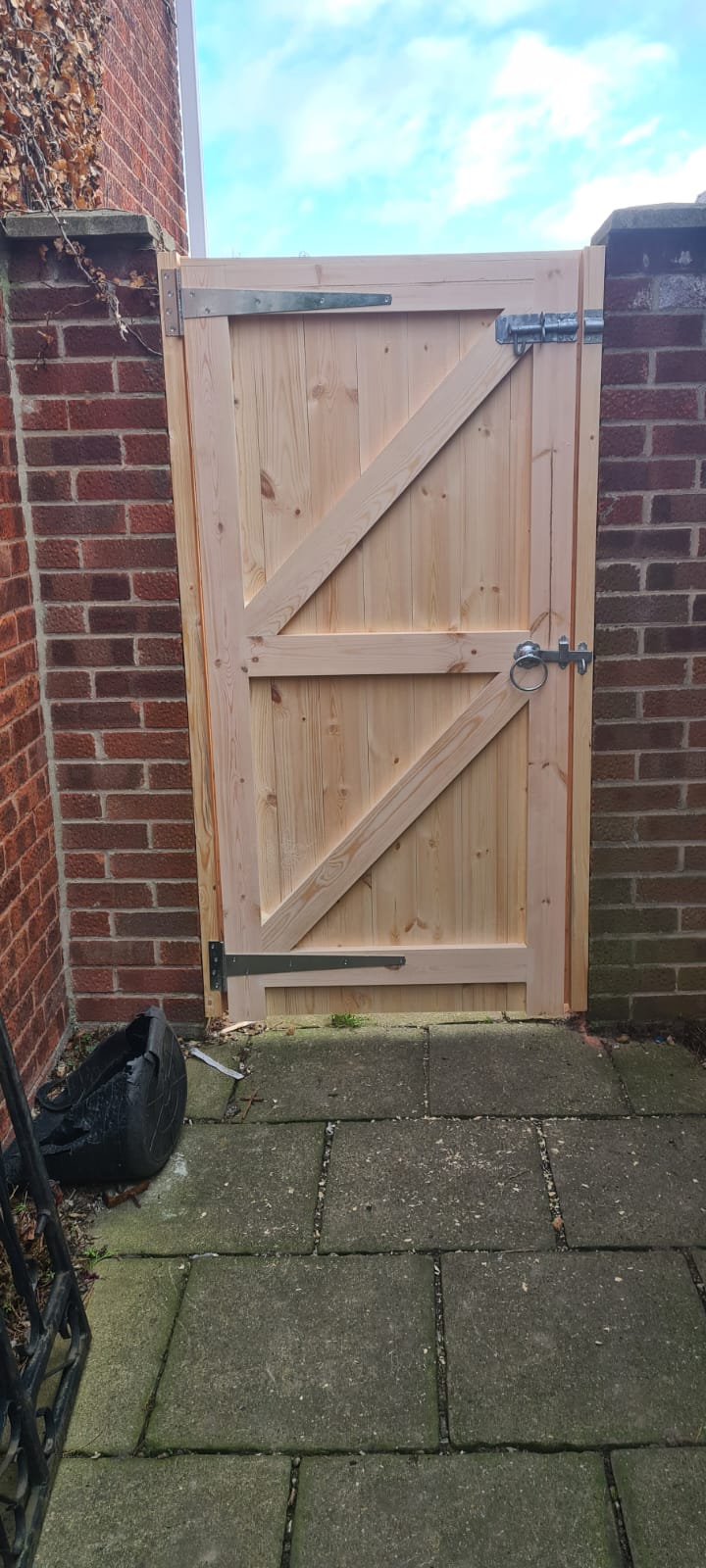
A well-made timber gate can only work as well as the structure holding it. Gate posts carry the weight of every opening and closing movement, resist wind pressure, and keep the gate correctly aligned through wet winters and dry summers. Get the posts right at the start and a handmade gate will hang neatly for years. Get them wrong and even the strongest gate can sag, drag or refuse to latch properly.
For driveway and garden entrances alike, posts are not an afterthought or a minor accessory. They are the foundation of the whole installation. Choosing the right section size, material and fixing method is just as important as choosing the style of gate.
Why gate posts matter so much
A gate puts a different kind of strain on its posts than a fence panel does. Its weight is concentrated at the hinge side, then repeatedly pulls and twists the post as it swings. A wide pair of driveway gates adds a great deal of leverage, particularly when opened in windy weather. The latch post has a simpler job, but it must remain square and steady if the gates are to meet cleanly in the centre.
This is why an undersized post is a false economy. It may look adequate on the day of fitting, yet movement in the ground or gradual twisting can soon show up as uneven gaps, dropped hinges and a gate that catches on the drive. A substantial post gives the hinges a secure fixing and provides the stiffness needed to keep the opening true.
The post also affects the finished appearance. A gate designed with traditional proportions can look lost beside narrow, lightweight posts. Conversely, properly sized timber posts give the entrance a solid, considered look and make the gate feel like a permanent part of the property rather than a temporary addition.
Choosing the right size for gate posts
There is no single post size that suits every gate. The correct choice depends on the gate width, height, weight, hinge arrangement and exposure of the site. A sheltered pedestrian garden gate may need far less support than a tall pair of solid driveway gates at the front of an open property.
For a typical single garden gate, a 100 mm square post is often a sensible starting point where the gate is modest in size and weight. Larger or taller gates generally benefit from 125 mm or 150 mm square posts. For driveway gates, especially wide pairs, 150 mm square posts are commonly preferred because they provide greater strength, deeper hinge fixings and a more substantial visual balance.
It is worth allowing for the gate’s future, not just its current weight. Timber is a natural material, and a gate may gain moisture during prolonged wet weather. Ironmongery can also place more load on the hinge side than expected, particularly with adjustable hinges, automatic closers or a long throwing latch. Where there is any doubt, choose the stronger post rather than trying to save a small amount at the structural point of the installation.
Height above ground and below ground
Posts need enough length below ground to resist movement. As a practical rule, around 600 mm to 900 mm of the post should be set into the ground, with deeper settings generally required for taller, heavier or more exposed gates. Ground conditions matter too. Firm, well-draining soil offers better support than soft, disturbed or waterlogged ground.
Do not calculate post length solely from the gate height. A six-foot gate, for example, needs clearance beneath it, room for hinges above or below the frame as required, and a meaningful depth in the ground. Ordering posts too short is one of the most avoidable installation problems.
Timber, concrete or metal posts?
The best material depends on the style of the property, the gate design and the level of maintenance you are prepared to undertake. Each option has a place, but they do not all suit a traditional timber gate equally well.
Timber posts are the natural choice where a warm, consistent appearance is wanted. They can be matched to the gate, cut to the required height and fitted with traditional hook and band hinges, adjustable hinge sets or modern fittings. Quality engineered timber is particularly well suited to posts because its construction is designed to improve stability over solid, lower-grade timber. This matters on a component that must stay straight under load.
Concrete posts are durable and can be useful where long-term ground contact is the main concern. However, they are heavy, less forgiving to install and rarely complement a handcrafted wooden gate as well as timber does. Fixing hinges into concrete requires suitable fittings, and the finished result can feel more utilitarian than traditional.
Steel posts offer strength and a slim profile, making them a consideration for certain modern gates or automated installations. They need proper protection against corrosion and careful planning for hinge brackets, cabling and gate stops. For many homes, visible steel also changes the character of a timber entrance. It can be an effective engineered solution, but it is not automatically the best-looking one.
Setting posts properly in the ground
A good post can still fail if it is installed poorly. The hole should be wide enough to allow the post to be positioned accurately and surrounded by a firm, stable support. As a guide, make the hole noticeably wider than the post rather than forcing it into a tight slot in the soil.
Before anything is fixed permanently, establish the finished gate line and ground clearance. Driveways often fall away or rise across the opening, while garden paths may be uneven. The gate needs enough clearance to swing freely through the year without leaving such a large gap that pets or young children can pass underneath.
Set the hinge post perfectly upright in both directions and brace it securely before the concrete begins to cure. The latch post should then be set to the correct opening width, allowing for hinge gaps, the gate frame and the chosen latch or stop. Measuring between posts without allowing for ironmongery is a common source of frustration.
Concrete is widely used to secure gate posts, but it should be used with care. Avoid leaving a shape that funnels water down the side of the timber. Finish the top of the concrete so that it slopes away from the post, helping rainwater drain off rather than sit against the timber at ground level. In particularly wet ground, drainage around the base becomes even more important.
Allow adequate curing time before hanging heavy gates. Rushing this stage may cause the posts to shift under load, and it is far easier to correct alignment before the gates are fitted than afterwards.
Matching posts to your ironmongery
Posts and hinges must be chosen together. Hook and band hinges need enough timber depth for the hooks to be securely fixed, while adjustable hinges require room for bolts, plates and future adjustment. The fixing points should not sit too close to the edge of a narrow post, where repeated strain can encourage splitting.
For a pair of driveway gates, think beyond the hinges. A centre stop, drop bolts and a reliable latch all help prevent the gates moving in the wind. If the gates are automated, the posts must also accommodate the chosen motors, brackets, safety devices and any cable routes. Automation can be added later in some cases, but planning for it before the posts are installed usually makes for a tidier and stronger job.
The same principle applies to gate furniture. Heavy duty ironmongery is worthwhile for large gates, but it increases the importance of a properly sized post and sound fixings. Hardware should support the gate, not ask a lightweight post to do work it was never designed to carry.
Allowing for movement, weather and maintenance
All exterior timber benefits from sensible care. A suitable primer, paint, stain or oil helps protect the surface and maintain its appearance, but it does not replace good installation. The end grain, cut faces and areas around fittings deserve particular attention because moisture can enter there first.
Check posts and hinges periodically, especially after the first winter. Look for loose fixings, small changes in gate alignment, damage from strimmers and any pooling water around the base. Minor hinge adjustment or a fresh protective coating is straightforward when dealt with early. Left alone, a small alignment issue can put extra pressure on the joints, latch and posts.
At Premier Timber Gates Ltd, made-to-order gates and posts are planned as a complete installation rather than unrelated parts. That approach matters when openings are non-standard, ground levels are uneven or a property needs a gate built around a particular entrance.
Measure twice before ordering
When measuring for posts, record the clear opening, the desired gate height, the ground level on both sides and the available space for the gates to swing. Also consider whether the posts will stand inside the opening, outside it, or form part of an existing wall or fence line. These details affect both the gate width and the post size required.
If you are replacing old posts, do not assume their dimensions were right simply because they are already there. Previous gates may have been lighter, narrower or poorly aligned from the outset. A new handmade gate is an opportunity to correct the structure beneath it and create an entrance that works properly every day.
A gate should feel solid when you close it, with clean gaps, reliable latching and no need to lift or force it into position. That result begins below ground level, with well-chosen posts installed carefully and given the strength to do their job.


Comments