

Single Gate or Double Gate for Your Home?
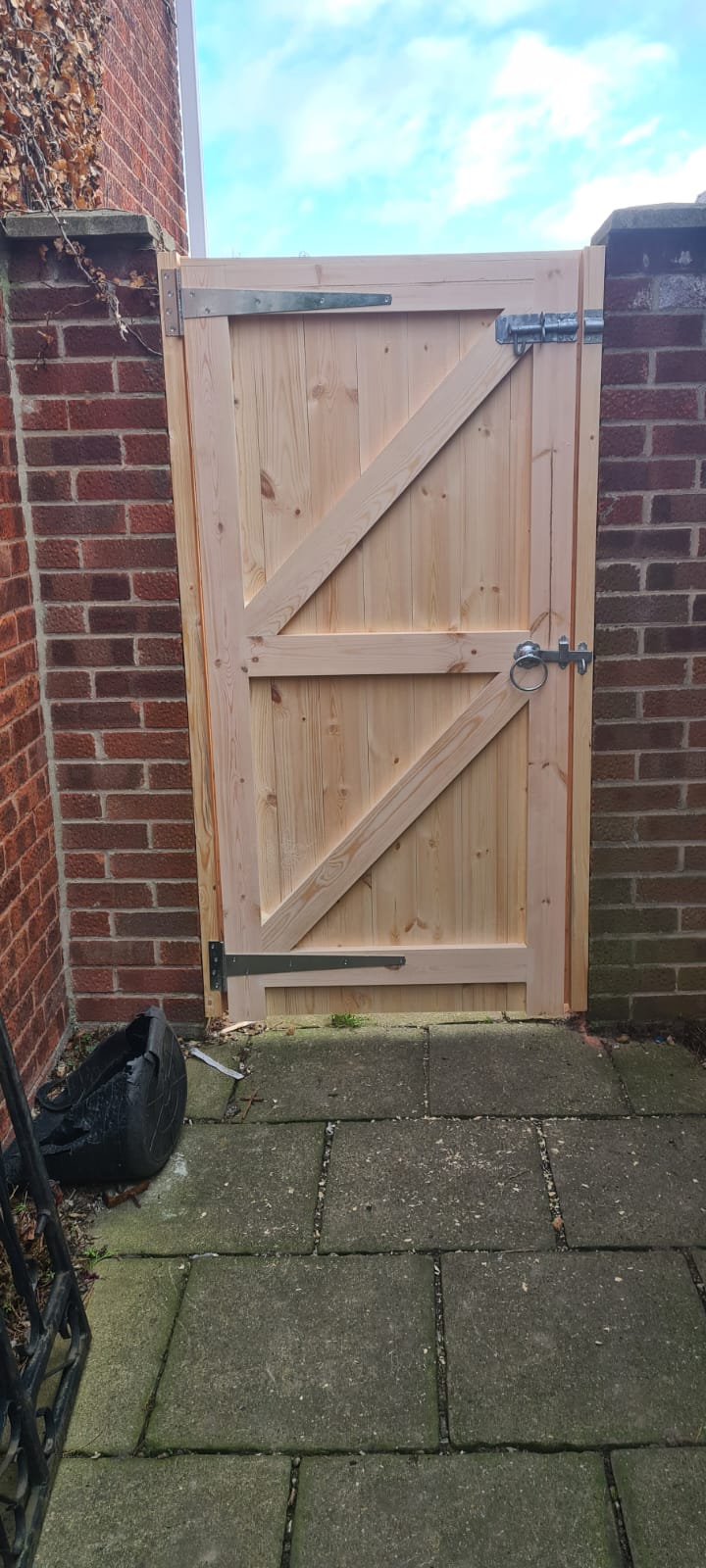
A gate that looks right on paper can be awkward every time you use it. The practical question is usually simple: single gate or double gate? Yet the right answer depends on more than the width of the opening. How you enter the property, what needs to pass through it, the available swing space and the character of the frontage all matter.
For a side passage or garden entrance, one well-made timber gate is often the neatest and most economical choice. For a driveway, wider access or a statement entrance, a pair of gates can give the clearance and proportions a property needs. The aim is not to buy the biggest gate possible. It is to choose a gate that works properly for the way your household uses the space.
When a single gate is the better choice
A single gate has one leaf, hinged from one post and secured against a receiving post. It is a straightforward arrangement that suits pedestrian entrances particularly well, from narrow side access paths to garden boundaries and smaller driveways.
The main advantage is convenience. You open one gate, walk through and close one gate behind you. For taking bins out, bringing shopping through a side entrance or allowing everyday access to the garden, this is hard to beat. There is less hardware to fit, fewer moving parts to maintain and no centre meeting point to align.
Single gates also tend to make the most sense where the opening is modest. A wide single leaf can become heavy and put considerable leverage on the hinge post, particularly when made from solid timber. Good construction and suitable ironmongery make a major difference, but there is still a sensible limit. If a single gate becomes too broad, it may be less stable and less pleasant to operate than two narrower leaves.
For a pedestrian gate, consider the clear opening rather than the overall made size alone. The clear opening is the usable gap once posts, hinges and the gate itself are in place. A gate that appears generous on a sketch can feel tight when a wheelbarrow, pushchair or mobility aid needs to pass through.
Where single gates work particularly well
Single timber gates are usually the natural choice for side entrances, paths between a house and garage, garden access and narrow driveways used mainly on foot. They can also suit a vehicle entrance where space is limited, provided the gate width and post specification are properly considered.
They offer a clean, uncluttered appearance. On a cottage garden boundary or beside a brick wall, one carefully proportioned gate can look more settled than a pair of small leaves forced into an opening that does not need them.
When double gates make more sense
Double gates use two leaves that meet in the middle. They are normally the best option for driveways, wider entrances and locations where cars, vans, trailers or larger garden equipment need access.
Their greatest benefit is width. Rather than hanging one very broad, heavy leaf from a single post, the weight is divided between two gates. Each leaf is easier to handle, and the finished entrance often looks more balanced. This is especially true on broad driveways where a single oversized gate can look out of proportion with the house and boundary.
A pair of timber driveway gates also gives you options in daily use. You can open one leaf for people on foot and both leaves when a vehicle needs to enter. That said, it is worth thinking honestly about your routine. If you regularly walk through the entrance several times a day, opening and fastening two leaves may soon become tiresome unless you use one leaf as the usual pedestrian gate.
Double gates need a reliable way of securing the meeting point. This commonly includes a drop bolt or gate stop to hold one leaf in place, with a latch or lock on the active leaf. These details are not an afterthought. They help the gates close neatly, resist movement in wind and provide a secure finish.
Double gates need room to swing
Before ordering, check the full swing arc of both leaves. Gates that open inwards need clear ground behind them, free from parked cars, raised beds, steps and changes in level. Outward-opening gates can be useful in some settings, but they must never swing across a public pavement or highway.
A sloping driveway needs particular care. A conventional gate may catch the ground as it opens if the slope rises into the property. Sometimes the answer is to adjust the hanging position, use rising hinges or review the gate design. It is far easier to resolve this before the gates are made than once they have arrived.
Single gate or double gate: measure for use, not just the gap
The width between existing posts or walls is only the starting point. A made-to-measure gate should allow for hinge clearances, latch positions, timber movement and the practical opening required. Measuring an old gate and copying its size can lead to trouble if the old gate has sagged, the posts are no longer square or the opening varies from top to bottom.
Take measurements at the top, middle and bottom of the opening. Check whether the posts are upright and whether the ground is level. For double gates, establish where the centre line will fall and allow an appropriate gap between the leaves. For a single gate, confirm which way it will hang and whether there is enough space for it to open fully.
Posts deserve the same attention as the gate itself. A substantial timber gate fitted to weak, loose or undersized posts will never perform as it should. Hinge posts carry the load and must be set securely, while closing posts must remain firm enough for the latch, catch or locking arrangement to work reliably.
Appearance matters, but proportion matters more
A gate is one of the first things people see from the road. Its style should sit comfortably with the property, whether that means a traditional boarded gate for privacy, an open estate-style design for a rural setting or a more detailed entrance gate to complement period brickwork.
For a narrow opening, a single gate can preserve a simple vertical rhythm. For a wide drive, double gates often create the stronger visual result because the central meeting line gives the entrance structure. The height should also be considered alongside width. Very tall, narrow gates can look imposing, while low gates across a broad entrance can appear lost.
Privacy is another deciding factor. A closeboarded or framed-and-ledged design can screen a garden effectively, but solid timber catches more wind than an open design. On an exposed site, this additional wind load places greater demand on posts, hinges and fixings. An open-railed or spaced-board style may be more suitable where wind exposure is high.
Construction that supports long-term use
The choice between one leaf and two will only pay off if the gate is built to withstand regular outdoor use. Quality joinery, well-selected timber and suitable external adhesives all contribute to a gate that stays sound and presentable.
At Premier Timber Gates Ltd, gates are handmade to order using engineered timber construction, mortice and tenon joints, D4 exterior-grade glue and hardwood dowels. These are practical details, not decorative claims. They help create a stronger structure designed to resist the stresses of weather, opening and closing better than a cheaply assembled gate.
Even the best-made timber gate needs sensible care. Apply the recommended primer, paint, oil or preservative system, pay attention to cut ends and inspect hinges and fastenings from time to time. Keeping the bottom edge clear of standing water and vegetation will also help protect the timber.
Do not forget access, security and family life
Think beyond the vehicle. If children use the garden, a pedestrian gate may need a higher latch position or a self-closing arrangement. If the gate is part of the main boundary, consider whether you need a lockable latch, ring latch, long throw lock or a more substantial security fitting.
For double driveway gates, decide how you will secure the inactive leaf when only one side is in use. For a single gate, make sure the latch can be reached comfortably from the side where you will approach it most often. These small choices shape whether a gate feels like a pleasure to use or a daily nuisance.
A well-proportioned single gate is often all a home needs. Where the opening is wide and vehicles must pass through comfortably, double gates are usually the more durable and attractive answer. Start with how the entrance will be used on an ordinary wet Tuesday, then choose the design, posts and ironmongery to support it for years to come.


Comments