
When to Replace Gate Posts: Signs to Look For
Updated: Sep 14
A gate can be beautifully made, properly hung and finished with good ironmongery, yet still fail to work as it should because the posts beneath it are past their best. Knowing when to replace gate posts can prevent a dragging gate, damaged hinges and, more importantly, an unsafe entrance to your home.
Gate posts carry far more strain than they first appear to. Every opening and closing movement pulls against the hinge post, while wind, heavy gates, wet ground and seasonal movement all add pressure over time. A post may look acceptable above ground while the section buried in the soil has already begun to decay.
When to replace gate posts rather than repair them
Replacement is normally the sensible option when a post has lost its structural strength. Surface weathering can often be cleaned, treated and refinished, but rot, looseness and splitting around the hinge area are different matters. The post is part of the gate structure, not simply a decorative support.
The clearest sign is movement at ground level. Hold the gate shut, then gently push and pull the hanging edge. A small amount of movement in a large timber gate can be normal, but the post itself should not rock in the ground. If it does, the footing may have failed, the timber may have decayed below soil level, or both.
A gate that has started catching on the drive, rubbing the latch post or dropping out of line is another warning. Check the hinges before assuming the gate is at fault. If they are tight but the whole hinge side has moved forward, backwards or outwards, the post is likely the problem.
Look closely around the base of timber posts. Soft wood, deep cracks, flaking timber and dark, damp patches that remain in dry weather all deserve attention. Probe suspicious areas gently with a screwdriver. Sound timber will resist it. If the tool sinks in easily, particularly on the face where hinges are fixed, the post may no longer hold fixings safely.
A lean does not always mean immediate replacement. Frost heave, a loose concrete surround or poorly compacted ground can sometimes be corrected if the timber remains solid. However, a post that is leaning and rotten should be renewed, not straightened and reused. Repositioning weakened timber only delays a bigger job.
The signs are not always obvious
Posts often deteriorate from the ground upwards, so the visible portion can be misleading. The highest-risk area is where the post enters the ground and where rainwater repeatedly runs down the timber. Soil holds moisture against the wood, while concrete set hard around a post can trap water if drainage has not been allowed for.
Pay attention to changes in how the gate behaves. A gate that once latched cleanly but now needs lifting is giving you useful information. So is a latch that no longer meets the catch, hinges that need frequent adjustment, or bolts that have begun pulling out of the timber.
For driveway gates, inspect both posts even if only one carries the hinges. The closing post must withstand the impact of the gate closing and provide a secure fixing for the latch, drop bolt or automatic equipment. If one post has moved, there is a fair chance the other has been installed in similar ground and may need checking too.
The following issues usually justify prompt replacement rather than a temporary repair:
The post rocks in the ground or has visibly shifted from vertical.
Rot has reached the hinge fixings, latch area or the timber below ground level.
Large splits run through the post, especially where bolts, hinge bands or screws are fitted.
The gate has dropped substantially and hinge adjustments no longer bring it back into line.
A vehicle, falling branch or strong wind has cracked the post or loosened its footing.
Can a damaged gate post be repaired?
It depends on the cause and the condition of the timber. A weathered post with a sound core may only need cleaning, preservative treatment and a fresh protective coating. Loose hinge bolts can sometimes be replaced with correctly sized through-bolts, provided the surrounding timber is firm and not split.
Likewise, a gate that has dropped slightly may only require hinge adjustment. This is particularly common after a newly installed timber gate has settled through its first change of season. Gates and posts should be assessed together before replacing either one.
What should be avoided is packing out hinges, adding extra screws or forcing the latch into position when the real fault is a failing post. These fixes may keep the gate usable for a short while, but they transfer more load into already weakened timber. Eventually, a hinge can tear free or the gate can become difficult to secure.
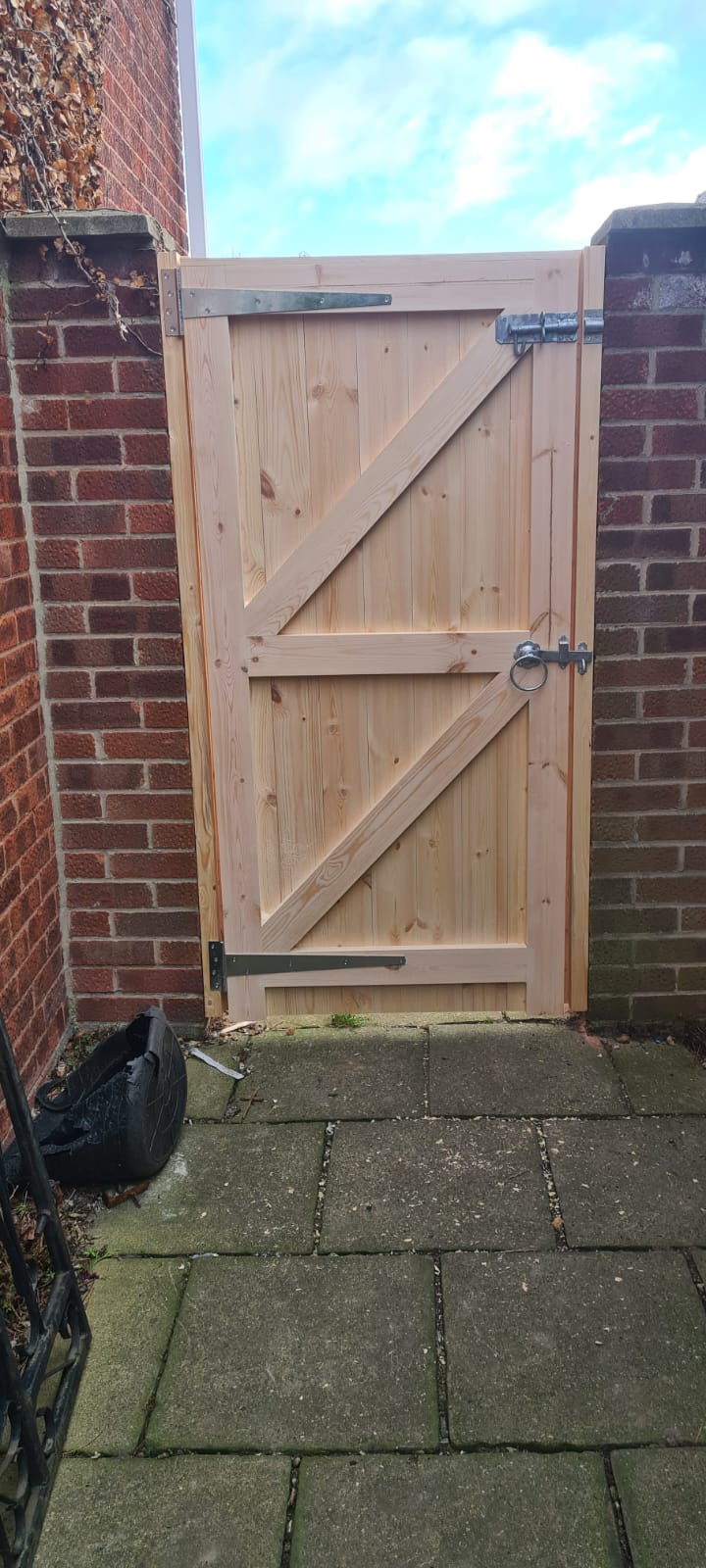
If you are replacing an old gate at the same time, renewing questionable posts is usually good value. Installing a new handmade gate onto undersized, rotten or poorly aligned posts can compromise the finished job from day one. A gate only performs as well as the structure it is hung from.
Choosing the right replacement posts
The correct post size depends on the gate’s width, height, weight and hinge arrangement. A light garden gate has different requirements from a pair of solid driveway gates. It is tempting to match the dimensions of the old posts, but old posts are not always an indication of what was suitable in the first place.
For a substantial driveway gate, use posts with enough section to resist twisting under load. The hinge post has to support the full weight of the gate while remaining true over years of use. A narrow post may appear adequate initially, then gradually move or split around the hinge fixings.
Timber quality matters just as much as size. Engineered timber posts are made from selected sections bonded together in opposing grain directions. This helps reduce the natural tendency of solid timber to twist, cup and split as it dries and responds to weather. For gates that need to stay aligned, that added stability is valuable.
At Premier Timber Gates, our engineered timber construction is designed to provide a strong, stable alternative to more costly hardwood, while retaining the honest character of a traditional wooden gate installation. Whichever timber you choose, make sure it is suitable for exterior use and protected correctly before fitting.
Consider the appearance as well as the load. Posts should suit the scale of the gate and the property. A wide, well-proportioned post can frame a driveway entrance properly, while a slimmer post may be better suited to a pedestrian garden gate. If the entrance is non-standard, made-to-measure posts and gates can avoid awkward packing pieces and improvised fitting.
Fitting replacement gate posts properly
A new post can fail early if it is fitted badly. Start by checking for underground services before digging. Mark out the gate opening carefully, allowing for hinge clearances, latch positions and the gap below the gate. That bottom clearance is essential on sloping or uneven ground, and it prevents the gate from dragging when the drive surface changes slightly over time.
The post needs to be plumb in both directions, not simply upright when viewed from the front. Use a level, then check the opening width at the top, middle and bottom before the footing sets. Small errors become obvious when a pair of gates is hung.
Depth and footing size depend on the gate load, soil conditions and exposure of the site. Heavy driveway gates and exposed locations need more substantial support than a small side gate in sheltered ground. The buried portion of a timber post should be protected, and the installation should allow water to drain rather than sit against the timber.
Concrete can provide a firm footing, but it should not create a bowl that holds water around the post. Shape the top of the concrete so it falls away from the timber, then finish the surrounding ground so rainwater drains clear. In very wet or unstable ground, it may be worth taking advice from an experienced installer before choosing the footing method.
Do not hang a heavy gate until the posts and footings are fully secure. Once the gate is in place, fit hinges with suitable bolts and check that it swings freely through its full travel. Test the latch, drop bolts and stops before considering the job finished.
Give new posts the care they need
Replacement posts should be maintained as part of the whole gate installation. Inspect them at least once a year, ideally after winter, for early signs of cracking, coating failure or movement. Keep soil, leaves and climbing plants away from the base where possible, as trapped moisture shortens the life of any timber.
A protective oil or paint system should be renewed in line with the product guidance and the exposure of the site. South-facing posts may need attention because of sun and drying, while shaded areas often remain damp for longer. Also check hinges and bolts regularly, as loose metalwork can damage otherwise sound timber.
A straight, solid post gives a well-made gate the support it deserves. If yours is moving, decaying or no longer holding the gate in line, replacing it before the gate itself is damaged is the practical choice.


Comments