
Wooden Gates vs Composite for British Homes
Updated: Sep 10
A driveway or garden gate has a hard job to do. It needs to look right from the road, stand up to British weather, operate reliably every day and suit the character of the property. When weighing up wooden gates vs composite, the best choice is rarely just about which material needs the least attention. It is about how the gate is made, the size of the opening, the finish you want and how long you expect it to serve your home.
Composite gates have become a familiar option for modern properties, particularly where a low-maintenance finish is the main priority. Wooden gates remain the natural choice for homeowners who want warmth, traditional character and proper made-to-measure flexibility. Both have their place, but they do not offer the same look, construction or long-term ownership experience.
Wooden Gates vs Composite: The Main Difference
A wooden gate is made from timber, while a composite gate is normally made from a mix of recycled wood fibres and plastic. Many composite designs use boards fitted into an aluminium frame, although construction varies considerably between suppliers.
That difference affects far more than appearance. Timber can be machined, jointed and built to suit a particular opening. It can be made as a tall privacy gate, a traditional five-bar driveway gate, a side gate or a shaped garden gate. Composite systems are often based around set board sizes, frame styles and colour options. This can work well for a clean, contemporary design, but may be less forgiving where an opening is unusual or a property needs a gate with more traditional proportions.
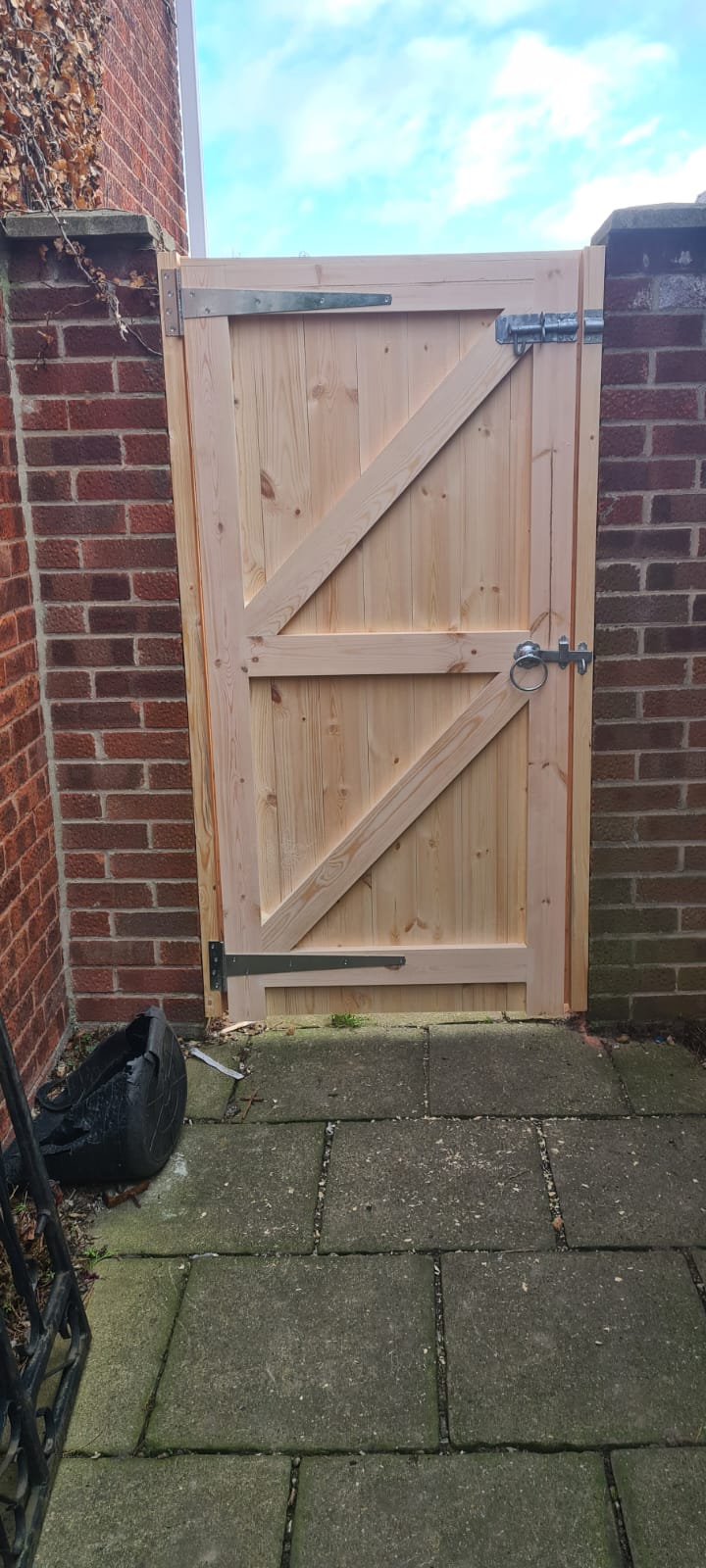
For a bespoke gate, the quality of the build matters as much as the material. A well-made wooden gate should not simply be a collection of nailed boards. Strong mortice and tenon joints, hardwood dowels and exterior-grade D4 glue give the frame real strength. These details help a gate cope with movement, weight and regular use over the years.
Appearance and Kerb Appeal
Timber has a character that composite can imitate but not fully reproduce. The grain, natural variation and depth of a painted or oiled wooden gate work particularly well with period homes, cottages, brick properties and established gardens. Even on a newer build, a properly designed timber gate can soften the frontage and make the entrance feel more individual.
Composite offers a more uniform finish. That appeals to homeowners looking for crisp lines, grey tones or a modern slatted style. It can also be useful where the gate needs to match composite fencing or aluminium features already in place.
There is no wrong answer here. A sleek composite gate may suit a contemporary rendered home perfectly. On the other hand, fitting a plastic-based gate to an older stone cottage or a traditional brick driveway can look out of place. Consider the gate as part of the whole frontage, including posts, fencing, paving and the style of the house.
Choice of design and size
Wood is exceptionally adaptable for non-standard openings. A gate can be produced to an exact width and height, with the right rail layout, boarding direction and finish for the job. This is valuable where existing brick piers are uneven, the entrance slopes, or standard off-the-shelf sizes leave awkward gaps.
Composite gates can be cut and configured in some cases, but the system itself may set limits. A very wide gate also needs careful consideration regardless of material. Weight, hinge capacity, post strength and ground clearance should all be planned before ordering.
Strength, Stability and Everyday Use
People often assume composite automatically means stronger or longer-lasting. In reality, it depends on the product and how it is supported. Composite boards can be durable, but they usually rely on a metal frame for structure. The boards themselves are not a replacement for a properly engineered gate frame.
Wooden gates can be extremely strong when built from suitable timber and joined correctly. At Premier Timber Gate, engineered timber is used because it is designed to offer better stability than standard pressure-treated timber, while keeping the cost well below premium hardwood. Engineered sections are formed from selected timber pieces, helping to reduce the natural tendency for a single wide piece of wood to twist or cup.
No gate material is completely unaffected by its surroundings. Timber responds to changes in moisture and temperature, while composite can expand and contract in heat. Dark composite colours may become notably hot in direct summer sun. Poor installation can cause either type to sag, bind or fail prematurely.
The posts and ironmongery are just as important as the gate itself. A solid gate on undersized or poorly fixed posts will not perform as it should. For driveway gates, particularly larger pairs, use hinges and fittings rated for the weight and ensure the posts are installed securely in suitable foundations.
Maintenance: Less Is Not None
Composite is often chosen because it does not need painting or staining. That is a fair advantage. Usually, it only needs washing down to remove dirt, algae and traffic film. However, it can still mark, scratch or fade over time, and repairing a damaged surface is not always as straightforward as touching up painted timber. Replacement boards may also vary slightly in colour if the original gate has weathered.
Wood requires more regular care, but maintenance is not a sign of weakness. It is how you protect and preserve a natural material. An exterior primer and quality paint system, or a suitable oil where the design allows, helps defend the timber from moisture and UV exposure. How often this is needed depends on the gate’s position, the finish chosen and how exposed it is to rain and sun.
A south-facing driveway gate will need checking more often than a sheltered side gate. Inspect timber annually for coating wear, open joints, damaged edges and signs that water is sitting around the bottom rail. Keeping the gate clean, maintaining the finish and adjusting ironmongery when needed will go a long way towards extending its service life.
Cost and Long-Term Value
The initial price of composite can be higher than many homeowners expect, particularly once aluminium frames, posts, hardware and installation are included. It may offer savings on repainting, but the overall figure needs comparing properly.
Wooden gates cover a wide price range. Basic softwood gates can be inexpensive, but they may not have the construction or stability required for a prominent driveway entrance. A handmade engineered timber gate costs more than a lightweight mass-produced panel, yet it provides stronger joinery, tailored sizing and a finish that can be renewed rather than replaced.
Hardwood is another option, but it carries a much higher price. For many households, engineered timber gives a sensible balance: a substantial, traditional gate with improved stability and a cost that remains realistic for a home improvement project.
When comparing quotations, look beyond the headline figure. Check whether posts, hinges, latches, bolts, treatment and delivery are included. Ask about the timber section sizes, joinery method and whether the gate is made to fit the opening or simply supplied in a standard size. A cheaper gate can become costly if it needs altering, reinforcing or replacing earlier than expected.
Which Gate Is Right for Your Property?
Choose composite if your priority is a uniform modern appearance and you want to avoid routine painting or oiling. It can be a sensible fit for contemporary homes, matching fencing systems and smaller, straightforward openings.
Choose wood if you value traditional appearance, custom sizing and a gate built around the property rather than around a fixed system. It is especially well suited to period homes, rural properties, uneven entrances and anyone wanting a particular style that is not available in standard ranges.
For many UK homes, the deciding factor is not wooden versus composite in isolation. It is whether the gate has been properly designed, made from suitable materials and installed with the correct posts and ironmongery. A handsome gate should be practical as well as welcoming.
Before ordering, measure the opening carefully, allow for posts and hinge gaps, and think about how the gate will open on the drive or path. If the size is unusual or the gate will be a prominent feature of the property, having it made to order is often the simplest way to get the proportions, strength and finish right from the start.


Comments