

Self Closing Gate Hinge Review for Timber Gates
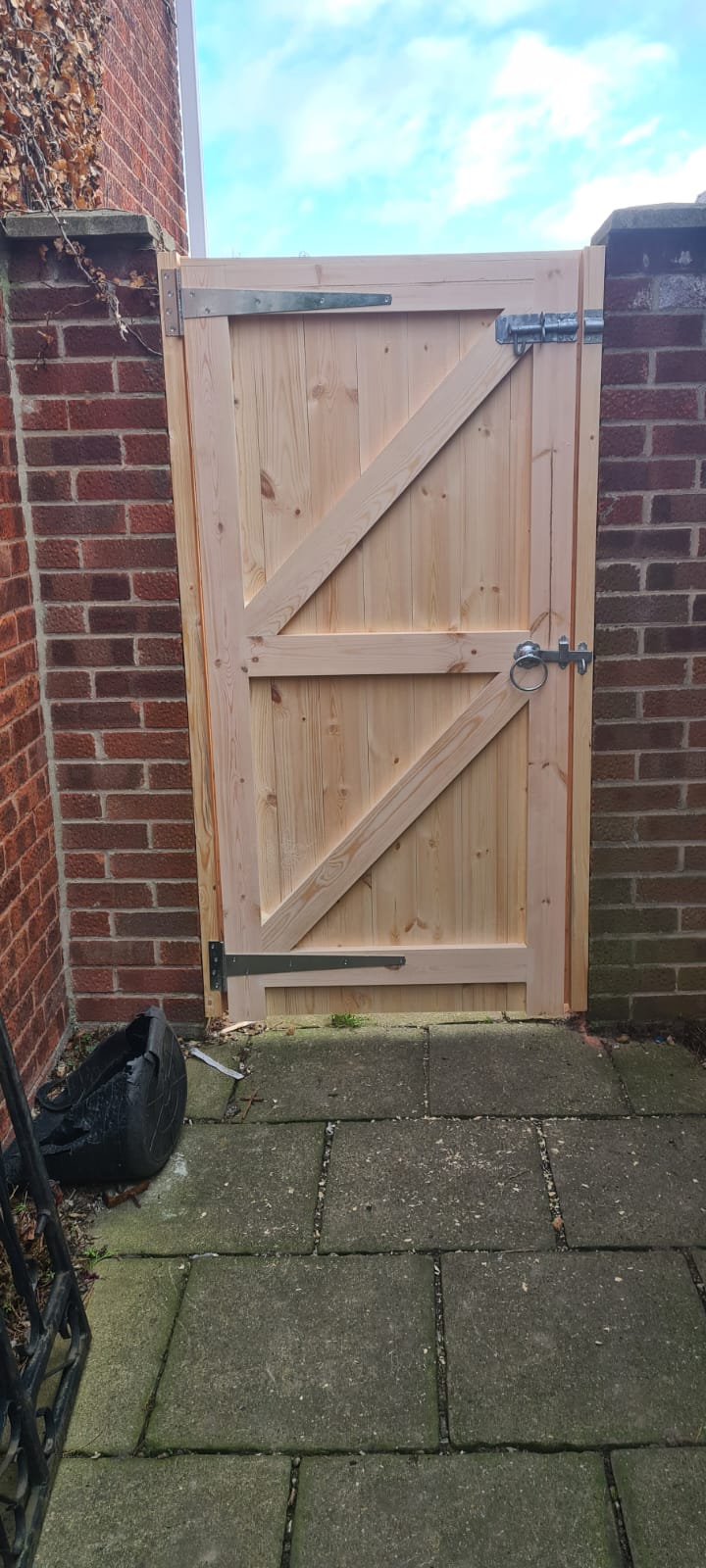
A gate that is left swinging open is more than an annoyance. It can let a dog out, remove a child-safety barrier, catch in the wind or leave a side entrance exposed. This self closing gate hinge review looks at what these hinges do well, where they fall short and how to choose one that suits a properly made timber gate rather than a lightweight off-the-shelf panel.
For most domestic properties, a good self-closing hinge is a worthwhile addition to a pedestrian garden gate, side gate or stair gate. The important point is that the hinge must be matched to the gate's size, weight and use. Fitting the strongest-looking spring hinge to a heavy gate does not automatically make it safe or reliable.
What a self-closing gate hinge should achieve
A self-closing hinge uses spring tension to bring the gate back to its closed position after somebody passes through. Some are conventional butt hinges with an enclosed spring barrel, while others are tensioned models with a visible adjustment mechanism. Both can work well when installed correctly.
The best result is a controlled close: firm enough to bring the gate into the latch, but not so aggressive that the gate slams. This matters especially around young children, elderly relatives, pets and timber gates with glazed panels or decorative ironwork. A gate that stops short of the latch is not truly self-closing. Equally, one that crashes into a timber post will soon mark the gate, loosen fixings and put unnecessary strain on the joinery.
For a standard side gate, spring hinges offer a tidy and straightforward solution. They take up little space, retain the familiar appearance of traditional gate furniture and do not require a separate overhead or post-mounted closer. They are particularly useful where a latch needs the gate to return shut every time, such as an access route to a rear garden.
Self closing gate hinge review: the honest verdict
Self-closing hinges are excellent for lighter to medium-weight timber gates that are hung squarely and move freely. They are less convincing on wide, heavy driveway gates, warped gates or gates exposed to strong prevailing winds. That distinction is often missed when homeowners buy hardware based on appearance alone.
A pair of quality adjustable spring hinges can provide dependable everyday closing on a well-built single pedestrian gate. Adjustment is their main advantage. You can increase tension after fitting until the gate reaches the latch, then reduce it slightly if the close feels too sharp. That degree of control is far better than relying on a gate falling shut under its own weight.
The trade-off is that spring tension has limits. A substantial engineered timber gate is designed to be durable and stable, but it still carries more weight than a basic softwood gate. Add a close-boarded face, solid frame, ledges and braces, or a long span between posts, and the hinge has a much bigger job to do. In these cases, ordinary spring hinges may close the gate sluggishly or fail to overcome the latch.
For heavy gates, a purpose-rated gate closer, hydraulic closer or a more substantial self-closing hinge system may be the better choice. The hardware specification should always be led by the finished gate weight and width, not just the dimensions of the opening.
What we like about adjustable spring hinges
Their biggest strength is simplicity. There are no cables, arms or boxes to interfere with the gate design. When correctly fitted, they are discreet, practical and easy to understand. They also suit traditional timber gates well, particularly when finished in black or galvanised steel to complement latches, bolts and gate furniture.
Adjustment is useful through the seasons. Timber moves slightly as moisture levels change, and a gate may behave differently after a wet winter than it does during a dry spell. A small tension adjustment can restore a positive close without replacing the hardware.
They also make sense for safety-led uses. A garden gate leading towards a road, pond or driveway should not rely on someone remembering to shut it. A self-closing action, combined with a reliable latch, adds a useful layer of day-to-day protection.
Where they can disappoint
Spring hinges cannot correct poor installation. If posts are leaning, the gate has dropped, or the latch is badly aligned, winding up the spring only masks the real problem. The result is usually a harder slam and an even less reliable close.
They can also be noisy if poorly lubricated or if fixings begin to work loose. A little seasonal maintenance is part of owning any external gate hardware in the UK climate. Check screws or coach bolts, look for surface corrosion, and lubricate moving parts with a suitable product according to the hinge manufacturer's guidance.
Appearance is another consideration. Some spring hinges are fairly industrial in style. That may suit a utility side entrance, but a finely made front garden gate may call for hardware chosen more carefully for proportion and finish.
Choosing the right hinge for a wooden gate
Start with the gate itself. Measure its width and assess its likely weight once boarded, glazed or fitted with ironmongery. Then consider how often it will be used. A quiet side gate used twice a day has very different demands from a busy access gate used by children, visitors, bins and gardeners.
Check the stated weight capacity of the hinges as a pair, rather than assuming one figure applies to each hinge. Choose hardware with a sensible margin above the expected gate weight. Running hinges constantly at their maximum rating reduces their useful life and makes the action less forgiving.
The post is equally important. A closing hinge transfers repeated force into the post and its fixings. A solid, correctly installed timber post gives the hardware something secure to work against. Avoid fitting a substantial self-closing gate to a loose fence post or thin, weathered timber. The gate may close at first, but movement in the post will soon affect alignment.
For a quality timber gate, use fixings appropriate to the hinge and timber thickness. Through-bolts can be preferable for heavier work because they spread the load more securely than short screws. If screws are specified, pilot holes help prevent splitting and ensure the fixing pulls tight. Stainless steel or properly galvanised fixings are sensible choices for exterior use.
Fitting matters as much as the hinge
Hang the gate first and make sure it swings freely without scraping the ground, post or surrounding fence. Leave a suitable clearance below the gate for drainage, leaves and minor ground movement. The gate should sit level and the latch should meet cleanly before any spring tension is added.
Fit the hinges in line with each other and follow the manufacturer's handedness instructions. Many self-closing hinges only work in one closing direction. This sounds obvious, but it is an easy mistake to make once the gate and post are already drilled.
Set the tension gradually. Start at the lowest practical setting, test the close several times and increase in small increments. Test it from different opening positions rather than pushing it fully open every time. A good hinge should pull the gate shut from normal use, not merely from the last few inches.
If the gate closes but will not engage the latch, do not immediately add more tension. First inspect the latch alignment, hinge position and clearance around the gate. A latch keeper moved by only a few millimetres can make the difference between a secure close and a gate that bounces back open.
Best uses around the home
Self-closing gate hinges are most effective on single-leaf pedestrian gates. Garden side gates, access gates between front and rear gardens, refuse storage gates and timber stair gates are all common applications. They are also useful on boundaries where children or pets need a reliable barrier.
They are not usually the first choice for double driveway gates. A pair of driveway leaves needs coordinated closing and secure meeting points, often with a drop bolt, centre stop or dedicated closing arrangement. One leaf may close before the other, and wind can make the action unpredictable. A properly specified system is better than trying to force a domestic spring hinge to do a job beyond its rating.
At Premier Timber Gates Ltd, we would always advise choosing the gate and ironmongery as one working system. Handmade engineered timber, sound mortice and tenon construction, solid posts and correctly rated hardware give a far better result than treating the hinge as an afterthought.
A sensible buying decision
Choose a self-closing hinge when you need a neat, practical way to make a light or medium-weight timber gate return to its latch. Look for an adjustable model, match its capacity to the finished gate, and allow for proper posts and fixings. If your gate is unusually wide, heavy or exposed, spend the time to specify a heavier-duty closer instead.
The most satisfying gate is not the one with the most powerful spring. It is the one that swings easily, closes calmly and stays shut when your hands are full.


Comments